
Bethnal Green Area Guide – East End history meets modern living
Central line Zone 2, Young V&A, Victoria Park edge—Tower Hamlets character, rent pockets and Shoreditch without the premium.
Overview
Bethnal Green is one of East London’s most interesting neighbourhoods: historic, diverse, well-connected, creative, affordable compared with some nearby hotspots, but increasingly desirable and changing fast. It sits in the London Borough of Tower Hamlets, between Shoreditch, Whitechapel, Stepney, Mile End, Hackney, Bow and Victoria Park. For many Londoners, Bethnal Green offers one of the best balances in the East End: Central line transport, strong local identity, parks nearby, independent food and drink, period streets, modern flats, cultural institutions, and easy access to both the City and East London’s creative scene.
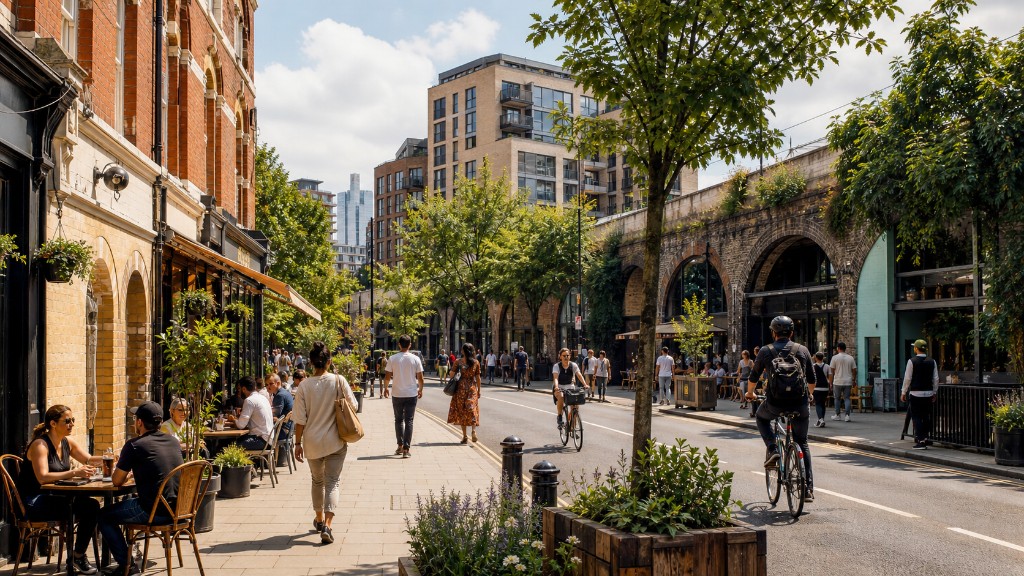
The area is not as polished as Islington, not as expensive as Notting Hill, not as corporate as Canary Wharf, and not as nightlife-branded as Shoreditch. Its appeal is more layered. Bethnal Green has old East End history, working-class roots, migrant communities, council estates, Victorian terraces, railway arches, cafés, pubs, galleries, new apartment schemes, local markets, family-friendly attractions and quick Tube links. It can feel gritty and practical in one street, then stylish and creative a few minutes later.
For renters and newcomers, Bethnal Green is attractive because it offers central access without fully central prices. The Central line puts Oxford Circus, Tottenham Court Road, Bank, Liverpool Street and Stratford within easy reach, while the area itself gives access to Victoria Park, Columbia Road, Broadway Market, Brick Lane, Shoreditch, Whitechapel and the Regent’s Canal. It works for young professionals, creatives, students, couples, sharers, families and people who want East London character without living directly in the busiest nightlife zones.
The honest picture is that Bethnal Green is changing. Rents have risen, new developments have arrived, and nearby areas such as Shoreditch, Hackney and Victoria Park have increased demand. But it still keeps a local, lived-in feel that many more polished London neighbourhoods have lost. That combination — history, community and modern living — is exactly what makes Bethnal Green worth understanding.
The character of Bethnal Green
Bethnal Green’s character is strongly East End. It has a practical, urban feel, shaped by social history, migration, public housing, markets, transport, small businesses and proximity to the City. It is not a picture-postcard neighbourhood in the way Greenwich or Notting Hill can be. Its appeal is more real and street-level.
The main roads — Cambridge Heath Road, Bethnal Green Road, Roman Road edges, Hackney Road and parts toward Whitechapel — can feel busy and traffic-heavy. But side streets reveal a different picture: Victorian terraces, small squares, converted flats, local pubs, cafés, community gardens, churches, mosques, schools and quieter residential pockets. Bethnal Green rewards people who walk around rather than judge it from one main road.
The area is also defined by proximity. You can walk to Shoreditch for nightlife, Brick Lane for food and vintage shopping, Columbia Road for flowers, Broadway Market for weekend cafés, Victoria Park for green space, Whitechapel for Elizabeth line access, and Mile End for more transport connections. This makes Bethnal Green feel like a base rather than an isolated destination.
The London Borough of Tower Hamlets is one of the densest and most diverse boroughs in the capital. The borough’s profile highlights extremely high population density compared with London as a whole, which helps explain the intensity and diversity of neighbourhoods like Bethnal Green.
For residents, that density brings both energy and pressure. There are many services, transport options and communities close together. But streets can be crowded, housing can be competitive, and public space matters more because many people live in flats without private gardens.
East End history
Bethnal Green’s identity is rooted in East End history. Historically, the area was associated with industry, weaving, furniture-making, poverty, social reform, migration and working-class life. It developed from a settlement around the Green, much of which survives today as Bethnal Green Gardens near Cambridge Heath Road.
The area has long been linked with London’s social history. Like much of the East End, Bethnal Green experienced overcrowding, hardship, wartime bombing, post-war rebuilding, council housing development and waves of migration. It has been home to Jewish, Irish, Bangladeshi, Caribbean, Somali, Eastern European and many other communities over time. This layered history gives the area its cultural depth.
Bethnal Green is also remembered for tragedy. During the Second World War, the Bethnal Green Tube disaster of 1943 became one of the worst civilian disasters in wartime Britain, when 173 people died in a crush while entering the station shelter. That history is part of the local memory and is commemorated near the station. For an area guide, this matters because Bethnal Green is not only cafés and flats; it carries serious East End history.
Today, the area’s historic identity exists beside modern development. Old pubs and market streets sit near new apartment blocks. Long-standing estates sit near renovated terraces. Independent cafés appear beside everyday shops. This contrast is the essence of modern Bethnal Green: old East End foundations with a new wave of residents and businesses.
Transport connections
Transport is one of Bethnal Green’s biggest strengths. Bethnal Green Underground Station is on the Central line in Zone 2, located on Cambridge Heath Road. TfL lists the station as serving the Central line, with facilities including gates, WiFi, ticket halls and escalators.
The Central line makes Bethnal Green highly practical. Westbound journeys connect quickly to Liverpool Street, Bank, St Paul’s, Holborn, Tottenham Court Road, Oxford Circus, Bond Street and beyond. Eastbound journeys connect to Stratford, Leyton, Leytonstone and further east. For people working in the City, the West End, Stratford or parts of central London, this is a major advantage.
Bethnal Green also benefits from nearby rail and Overground options. Cambridge Heath station and Bethnal Green railway station provide National Rail connections, while Whitechapel offers the Elizabeth line, District line, Hammersmith & City line and Overground connections. Depending on where you live, Whitechapel may be walkable, giving access to one of London’s most important newer transport links.
Buses are also strong. Routes along Bethnal Green Road, Cambridge Heath Road, Hackney Road and Roman Road connect the area to Shoreditch, Hackney, Mile End, Stepney, Whitechapel, Bow, Liverpool Street and the City. Cycling is common, especially for people commuting to the City, Shoreditch, Hackney or Canary Wharf via quieter routes and canalside paths where suitable.
The main transport downside is that the Central line can be very busy, especially at peak times. It is fast and useful, but not always comfortable. If you live closer to Whitechapel or Cambridge Heath, you may prefer alternative routes depending on commute.
Housing and where to live
Bethnal Green’s housing mix is one of its most important features. The area includes Victorian terraces, converted flats, council estates, ex-local authority flats, mansion blocks, new-build apartments, warehouse conversions and modern developments. This variety creates different price points and lifestyles within a relatively compact area.
Close to Bethnal Green station, flats are common and demand is strong because of the Central line. Streets around Bethnal Green Gardens, Museum Gardens and Cambridge Heath Road offer convenience, but main-road noise can be an issue. Side streets can feel calmer and more residential.
Toward Victoria Park, the feel becomes greener and more desirable. Homes near the park often command a premium because Victoria Park is one of East London’s best open spaces. Toward Globe Town and Roman Road, the area becomes more residential and local, with access to markets and family-oriented streets. Toward Shoreditch and Brick Lane, prices rise and the atmosphere becomes more nightlife and creative-industry focused. Toward Whitechapel, the area becomes busier, denser and more connected to the Elizabeth line and hospital/university infrastructure.
For renters, Bethnal Green can still offer better value than nearby Shoreditch, Hoxton, London Fields or parts of Hackney, but it is no longer cheap in an absolute sense. One-bedroom flats can be expensive, especially near the Tube or park. Shared housing remains common and can be a practical way to live locally without paying for a full flat alone.
The best rental strategy is to decide which version of Bethnal Green you want:
- Near Bethnal Green station: best for Central line access and convenience.
- Toward Victoria Park: best for green space and lifestyle, usually more expensive.
- Toward Whitechapel: best for Elizabeth line access and City connections.
- Toward Shoreditch/Brick Lane: best for nightlife and creative energy.
- Toward Roman Road/Globe Town: more local, residential and potentially better value.
- Toward Cambridge Heath/Hackney Road: good for cafés, rail links and Hackney/Shoreditch access.
Modern flats and new developments
Bethnal Green has seen more new housing and modern apartment schemes over recent years. This is part of wider East London development pressure. New-build flats can offer lifts, balconies, energy efficiency, secure entry, bike storage and sometimes concierge-style amenities. For renters used to older London housing, this can be attractive.
However, new-build living often comes with a price premium. A modern flat may cost more than an older conversion, even if the location is similar. The trade-off is comfort, insulation, security and lower maintenance. Older properties may offer more character and sometimes more space, but can have issues with sound insulation, heating, damp or layout.
For newcomers, the key is not to assume new automatically means better. Compare total cost, size, storage, noise, light, service charges if buying, and transport route. A small modern flat on a busy road may be less enjoyable than an older flat on a quiet side street.
Bethnal Green’s best housing value often comes from understanding micro-location rather than simply chasing the newest building.
Young V&A and cultural life
One of Bethnal Green’s most important cultural institutions is Young V&A, formerly the V&A Museum of Childhood. Located on Cambridge Heath Road, Young V&A describes itself as a museum where children, young people and families can imagine, play and design, with galleries designed around creativity and interaction.
The museum is a major asset for families and gives Bethnal Green a cultural identity beyond nightlife and transport. It reopened after a major redevelopment and has received significant recognition, including being named Art Fund Museum of the Year in 2024.
For residents, Young V&A is valuable because it makes the area more family-friendly and educational. It brings visitors, but not in the same overwhelming way as major tourist landmarks. It also connects Bethnal Green to East London’s wider cultural renewal, showing that the area is not only historic but actively evolving.
Beyond Young V&A, Bethnal Green benefits from proximity to cultural destinations in Shoreditch, Whitechapel, Hackney, Spitalfields and the City. Whitechapel Gallery is nearby, Brick Lane has galleries and events, and Hackney’s creative scene is within easy reach. Bethnal Green works well as a base for people who want culture without living directly in the busiest parts of East London.
Parks and green space
Bethnal Green has access to several important green spaces. Bethnal Green Gardens and Museum Gardens provide local open space near the Tube and Young V&A. Weavers Fields offers a larger neighbourhood park with sports and open space. Victoria Park, one of East London’s major parks, is a short walk or cycle away from many parts of Bethnal Green. Regent’s Canal and the routes toward Mile End Park also add outdoor options.
Tower Hamlets’ open space strategy notes that central Bethnal Green is within the catchment of parks above two hectares, and also discusses how growing population pressure increases demand for parks across the borough.
Green space matters in Bethnal Green because many residents live in flats. Access to Victoria Park, Weavers Fields or local gardens can make a major difference to quality of life. If you are choosing between two properties, proximity to a good park may be worth paying for, especially if you have children, a dog, or work from home.
Bethnal Green is not as park-dominated as Greenwich or Clapham, but it has enough green access to support a balanced lifestyle, especially toward Victoria Park and Mile End.
Food, cafés and pubs
Bethnal Green has a strong and varied food scene. It benefits from East End tradition, Bangladeshi and wider South Asian food nearby, cafés and bakeries, pubs, casual restaurants, bars, and proximity to Brick Lane, Shoreditch, Hackney Road and Broadway Market. The area is less polished than Islington or Notting Hill, but it has more edge and variety.
Local pubs are a major part of the neighbourhood. Bethnal Green has traditional East End pubs, renovated gastropubs, railway arch venues, cocktail bars and casual drinking spots. Some are aimed at long-term locals; others attract newer residents and visitors. This mixture gives the area a social range.
Cafés and brunch spots have expanded as the area has gentrified. Around Cambridge Heath, Hackney Road and the routes toward London Fields, the café scene has become stronger. This is convenient for remote workers and weekend residents, though it also reflects rising prices and changing demographics.
For everyday food, Bethnal Green is practical. You can access supermarkets, local shops, markets and specialist food stores. Brick Lane, Whitechapel, Roman Road, Broadway Market and Columbia Road all expand the options nearby.
Columbia Road, Brick Lane and nearby attractions
One of Bethnal Green’s strengths is what surrounds it. Columbia Road Flower Market is nearby and draws large crowds on Sundays. Brick Lane offers curry houses, vintage shops, bagels, street art, markets, bars and nightlife. Shoreditch is close for restaurants, clubs, offices and creative workspaces. Victoria Park and Broadway Market are reachable for weekend food, walking and park life.
This means Bethnal Green residents often enjoy a wider East London lifestyle without paying the absolute premium of living directly in Shoreditch or London Fields. You can walk or cycle to many destinations that people travel across London to visit.
The downside is that some areas can be crowded at weekends. If you live near Columbia Road, Sunday mornings can be busy. If you live near Brick Lane, nightlife and visitor traffic can affect the street feel. As always, micro-location matters.
Community and diversity
Bethnal Green’s community identity is one of its strongest features. The area has long-standing East End families, Bangladeshi communities, social housing residents, students, artists, young professionals, families and international renters. This mixture gives Bethnal Green life and complexity.
Tower Hamlets is one of London’s most diverse boroughs, with major Bangladeshi heritage and a young, dense population. The local area reflects that diversity through shops, restaurants, schools, places of worship, community centres and street life.
Newcomers should understand that Bethnal Green’s appeal is not only a product of recent cafés and flats. Its identity comes from communities that have lived and worked there for generations. As with Peckham, Brixton and Hackney, gentrification can bring investment and better services, but also pressure on affordability and local businesses.
The best version of Bethnal Green is one where old and new coexist: long-standing shops beside new cafés, families beside young renters, social history beside modern housing, and local culture beside new investment.
Cost of living
Bethnal Green is not cheap, but it can still feel more accessible than some neighbouring hotspots. Compared with Shoreditch, Hoxton, London Fields or parts of Islington, it may offer better rental value. Compared with outer East London, it is expensive. The cost depends heavily on location, property type and proximity to transport or parks.
Rent is the main cost. A room in a shared flat can be manageable for many young professionals. A one-bedroom flat near the station or Victoria Park can be costly. New-build flats are often more expensive than older conversions. Larger family homes are limited and can be expensive.
Transport costs can be reasonable because Bethnal Green is Zone 2 and close to central London. People working in the City or Shoreditch may even walk or cycle, reducing monthly transport spending. But the Central line, buses and nearby rail options still need to be included in budgets.
Food and social spending are flexible. The area offers both affordable local options and more expensive cafés, bars and restaurants. A newcomer can live relatively sensibly by cooking at home and using local shops, or spend heavily by going out frequently in Shoreditch, Columbia Road, Broadway Market and nearby hotspots.
A realistic budget should include rent, council tax, utilities, broadband, mobile phone, transport, groceries, social spending and savings. Bethnal Green’s advantage is that it gives access to a lot of London without always requiring central London prices. Its disadvantage is that rising demand has made it much less affordable than its old reputation may suggest.
Safety and street feel
Bethnal Green is a busy inner-city area, so street feel varies. Around the Tube station and main roads, it can feel active and crowded. Side streets can be quiet and residential. Toward Shoreditch, nightlife influence increases. Toward Victoria Park, the atmosphere becomes greener and more family-oriented. Toward Whitechapel, the area becomes denser and more urban.
As with any London neighbourhood, safety perception depends on street, time of day and personal comfort. Many residents feel comfortable because the area is active and well connected. Others may find some main roads or late-night routes less appealing. The best advice is practical: visit at night, walk the route from station to home, check lighting, check nearby pubs or late-night venues, and understand the specific block rather than relying on the area name.
Bethnal Green is not a polished luxury district. It is an active East End neighbourhood. For many residents, that is exactly why it works.
Families and schools
Bethnal Green can be family-friendly, especially for families who value transport, museums, parks and community services. Young V&A is a major advantage for children, and Victoria Park, Weavers Fields and local gardens provide outdoor space. Schools and nurseries are available locally, but families should research catchments and admissions carefully.
Housing is the main challenge. Family-sized homes can be expensive or limited, especially near parks and quiet streets. Some families may compare Bethnal Green with Bow, Mile End, Victoria Park Village, Wapping, Hackney, Leyton or further east depending on budget and space needs.
For families who can find the right property, Bethnal Green offers a strong urban childhood: museums, parks, markets, transport and diversity. It is less suburban than areas such as Blackheath or Dulwich, but more connected and central.
Who Bethnal Green suits
Bethnal Green suits people who want East London character with strong transport. It works well for young professionals, creatives, students, sharers, couples, City workers, families who like urban living, and people who want access to Shoreditch, Hackney, Whitechapel, Victoria Park and the City.
It is especially good for people who value convenience and character equally. You can live somewhere with history and community while still commuting quickly to central London.
It may not suit people who want quiet streets everywhere, very large homes, low rents or a polished environment. It can feel busy, mixed and uneven. But for many Londoners, that is part of its appeal.
Pros of living in Bethnal Green
- Location: close to the City, Shoreditch, Hackney, Whitechapel, Victoria Park and central London — Central line, buses, nearby rail, walkable links.
- Character: real East End history, not just a lifestyle brand.
- Variety: old pubs, modern cafés, parks, museums, flats, terraces, markets and diverse communities.
- Value vs neighbours: not cheap, but may offer better balance than more fashionable areas nearby.
Cons of living in Bethnal Green
- Rising cost: East London demand has pushed prices up.
- Uneven streets: some roads are noisy, busy or less attractive.
- Central line crowding: fast but packed at peak.
- Family space: limited compared with further-out areas.
- Transition: gentrification brings investment but raises affordability and identity questions.
Nearby alternatives
If you like Bethnal Green but want a different balance, consider Mile End for more transport and park access, Bow for value and residential streets, Whitechapel for Elizabeth line connections and dense urban energy, Hackney for more creative lifestyle, Shoreditch for nightlife and offices, Wapping for riverside calm, or Leyton for more space and better value further east.
Each alternative changes the balance between price, transport, culture and calm.
Final verdict
Bethnal Green is one of East London’s best neighbourhoods for people who want history, transport and modern living in one place. It has Central line access, East End identity, diverse communities, parks nearby, Young V&A, old pubs, new cafés, modern flats, period streets and quick access to Shoreditch, the City, Whitechapel and Hackney.
It is not the cheapest area, and it is not the quietest. Some streets are busy, some properties are expensive, and the Central line can be crowded. But Bethnal Green offers something valuable: a real London neighbourhood that still feels connected to its past while adapting to modern city life.
The honest summary is this: Bethnal Green is East End history meeting modern London. It is practical, diverse, changing and full of character. For renters and newcomers who want central access without losing local identity, it is one of the strongest choices in East London.