
Brixton Area Guide – Culture, community, and where to live
Lambeth’s lively centre: Victoria line, markets, music and food — renting near Brockwell Park, nightlife pros/cons and nearby alternatives.
Overview
Brixton is one of South London’s most distinctive neighbourhoods: energetic, diverse, musical, political, creative, and constantly changing. It is part of the London Borough of Lambeth and sits roughly between Clapham, Herne Hill, Stockwell, Camberwell and Tulse Hill. For many Londoners, Brixton is not just a place to live; it is a place with identity. It has markets, music venues, Caribbean food, independent shops, late-night bars, Victorian streets, council estates, newer apartment blocks, community campaigns, strong local memory and an atmosphere that feels very different from more polished parts of the city.
The area is famous for culture and community. Brixton’s story is closely connected with migration, especially the Black British and Caribbean communities that helped shape its food, music, politics and street life. At the same time, Brixton has also become one of London’s most visibly gentrified inner-South neighbourhoods, with rising rents, new restaurants, renovated houses, and pressure on long-standing traders and residents. That tension is part of its modern character. Brixton is exciting, but it is not simple.
For renters and newcomers, Brixton offers a powerful mix: fast transport into central London, a strong food scene, nightlife, live music, markets, parks nearby, and a wide range of homes. It can suit young professionals, creatives, students, couples, sharers and people who want city energy without living in the West End. See also best areas for young professionals, renting in London as a foreigner, and the London boroughs hub. But it is not always cheap, quiet or calm. The best reason to live in Brixton is because you want a neighbourhood with life, noise, movement and personality.
The character of Brixton
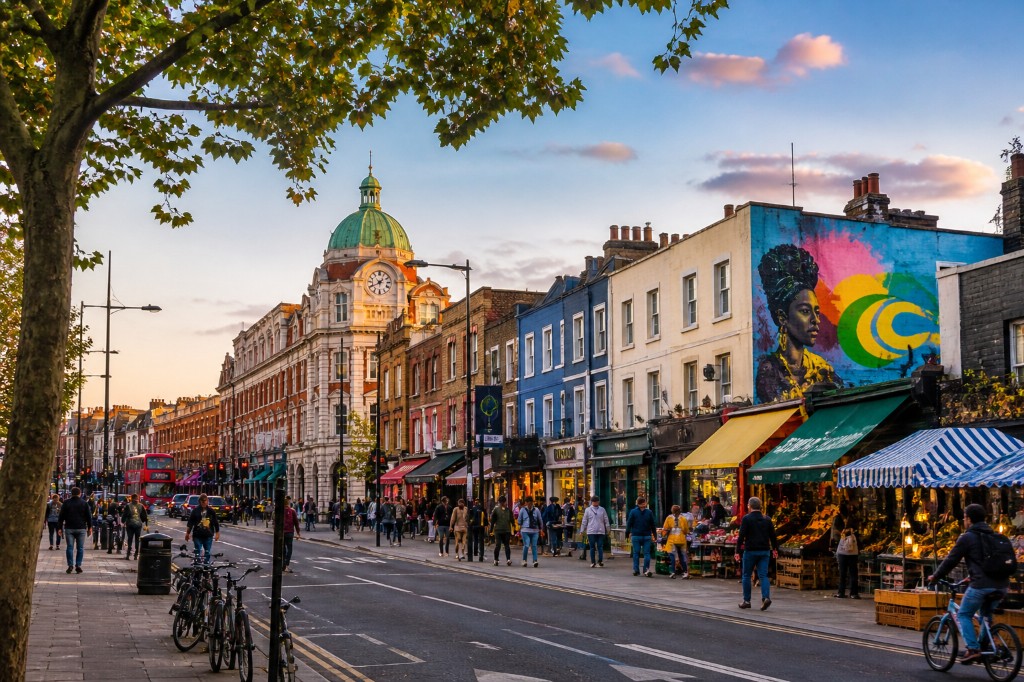
Brixton feels like a real urban centre rather than a purely residential district. Around Brixton Road, Electric Avenue, Atlantic Road, Coldharbour Lane and the market arcades, the area is busy, colourful and intense. Shops spill onto the street, buses pass constantly, music comes from bars and market stalls, and the pavements can be crowded. It is one of those parts of London where the street itself feels like part of the attraction.
Unlike Canary Wharf, Brixton is not polished or corporate. It is layered. You see different periods of London at once: Victorian and Edwardian terraces, post-war estates, railway arches, market arcades from the early twentieth century, newer flats and renovated shopfronts. That mixture is one of the reasons people love it. It can feel messy, but it rarely feels dull.
Brixton’s strongest quality is atmosphere. It has cultural weight. It is associated with reggae, dub, punk, activism, Black British history, Caribbean food, nightlife, street markets and independent creativity. Food, bars, live music venues, clubs and Brixton Village remain major parts of the local experience, which reflects how much the neighbourhood is still understood through culture and social life.
The drawback is that this energy is not for everyone. If you want quiet streets, minimal nightlife and a village atmosphere, Brixton may feel too busy. If you like being able to walk out of your front door and immediately find food, music, markets and people, it can be one of the most rewarding places in London.
Culture and community
Brixton’s cultural identity is central to its appeal. The area has long been one of the symbolic centres of Black British life in London. Its Caribbean influence remains visible in food shops, restaurants, hair salons, music, street life and community memory. The wider borough of Lambeth is highly diverse and densely populated, with a large share of residents from Black, Asian or multi-ethnic backgrounds.
This matters because Brixton is not just “trendy”. Its culture was built by communities, traders, campaigners, artists and families over decades. Newcomers should understand that Brixton’s appeal did not appear overnight. The food scene, music scene and street identity are rooted in social history.
At the same time, Brixton is also a place where gentrification is highly visible. New restaurants, higher rents, changing shopfronts and property demand have created tension. Some people see improvement, investment and wider choice. Others see displacement, loss of community control and pressure on long-standing local businesses. A good area guide should be honest about both. Brixton is vibrant partly because it has deep roots; if those roots are weakened, the area risks becoming less distinctive.
For residents, the community feeling can be strong if you participate. Local markets, community groups, cafés, music venues, schools, churches, food businesses and campaigns all contribute to local identity. But Brixton is also transient. Many renters come for a few years, enjoy the location and nightlife, then move further out for more space or lower costs.
Brixton Market and Brixton Village
Brixton Market is one of the area’s defining assets. It is not just a place to buy food; it is part of Brixton’s identity. The market area includes street market activity and covered arcades such as Brixton Village and Market Row. Brixton Village’s own history describes it as more than a market, calling it a symbol of community, resilience and togetherness, with origins going back to its creation in 1928 and its later role as a listed heritage asset.
The market is especially known for its mix of Caribbean, African, Latin American, European and Asian food, as well as cafés, small restaurants, produce shops, butchers, fishmongers, household goods, fabrics and independent traders. Over time, Brixton Village became known as a food destination, attracting visitors from across London. This brought energy and investment, but also concerns about rising rents and the changing balance between traditional traders and newer restaurants.
For residents, the market is one of the strongest reasons to live locally. You can shop for ingredients, meet friends for dinner, grab coffee, buy specialist foods, and experience a level of street life that many London neighbourhoods lack. It also makes Brixton feel self-contained. You do not need to travel into central London for atmosphere.
The challenge is crowding and cost. On popular evenings and weekends, the market area can be very busy. Some restaurants are no longer the cheap hidden gems they once were. Still, compared with many central London dining areas, Brixton remains varied and lively. For budget days out nearby, see family days out in London under £50.
Food and nightlife
Brixton has one of London’s most recognisable food scenes. Caribbean food remains central, but the area also offers Japanese, Mexican, Italian, Basque, Middle Eastern, vegan, brunch, street food, bakeries, cocktail bars and casual restaurants. The appeal is variety. You can eat cheaply, casually or more expensively depending on where you go.
The area is also known for nightlife. Brixton has pubs, late bars, clubs and music venues, including famous venues that have helped define its reputation as a night-time destination. This is a major advantage if you want social life close to home. It is a disadvantage if you live directly above or beside busy nightlife streets and need quiet. See how to make friends in London as a newcomer for building a social life in a new area.
For renters, this means micro-location matters. Living near the market can be exciting but noisy. Living toward Herne Hill, Tulse Hill, Loughborough Junction or quieter residential streets may offer a better balance. Before renting, visit the street at night and on weekends, not just during the day. Read how to avoid rental scams in London before you pay any deposit.
Transport
Transport is one of Brixton’s biggest strengths. Brixton Underground Station is on the Victoria line, one of London’s fastest and most useful Tube lines. The line runs between Brixton and Walthamstow Central. See our transport basics guide for Oyster, contactless and fare caps.
This makes commuting to Victoria, Oxford Circus, Green Park, King’s Cross St Pancras and other central locations very convenient. Brixton is also served by National Rail from Brixton railway station, plus a large number of bus routes and Santander Cycles hire points.
For many residents, the Victoria line is the key selling point. It makes Brixton feel closer to central London than it looks on a map. A person can live in South London and still reach major employment centres quickly. That convenience supports rental demand.
There are trade-offs. The Tube station can be very busy at peak times. Brixton Road can be congested. Buses are useful but can be slow through traffic. Cycling is possible, but route choice and confidence matter. Lambeth has invested in safer streets through liveable neighbourhood programmes focused on healthier streets, climate response and air quality.
Housing and where to live
Brixton offers a wide range of housing, but demand is strong. The area includes Victorian and Edwardian terraces, converted flats, purpose-built flats, council estates, ex-local authority homes, newer apartment schemes and shared houses. The type of home you find depends heavily on which side of Brixton you choose. Browse property listings on CheckLondon and use London postcodes explained when comparing areas.
Close to Brixton station and the market, flats are common and prices can be high because of convenience. Toward Herne Hill, you may find more leafy streets and family homes. Toward Stockwell and Clapham, transport links remain strong but prices vary by street. Toward Loughborough Junction and Camberwell edges, the feel can be more mixed and sometimes better value. Toward Tulse Hill, rents may become more manageable while still keeping Brixton within reach.
For renters, shared housing is common. Brixton is popular with young professionals and people who want nightlife and transport without paying central London prices. However, “not central London” does not mean cheap. Brixton has become expensive compared with many outer-South areas. A room in a shared house may be manageable, but a one-bedroom flat can be costly, especially near the station.
When choosing where to live, think in zones of lifestyle:
- Near Brixton station: best for transport, nightlife and convenience, but busier and often more expensive.
- Brixton Hill: good for buses, residential streets and access to Clapham/Balham direction, but check distance to Tube.
- Herne Hill side: greener, calmer, close to Brockwell Park, often attractive to couples and families.
- Loughborough Junction side: more urban, mixed, sometimes better value, with rail connections.
- Tulse Hill side: more residential and potentially more affordable, but further from the Tube.
The right choice depends on whether you prioritise nightlife, quiet, parks, commute, budget or space.
Parks and green space
Brixton’s biggest green asset is Brockwell Park, just to the south-east near Herne Hill. It is one of South London’s best parks, with open lawns, views, sports facilities, a lido, cafés and space for running, walking and relaxing. See our best parks in London for families guide for more green-space ideas. For many residents, proximity to Brockwell Park is a major reason to choose the Herne Hill side of Brixton.
The park helps balance Brixton’s intensity. You can live near one of London’s busiest cultural districts and still have access to a large green space. This is particularly valuable for families, dog owners, runners and people who need a break from street noise.
Smaller green spaces and squares exist around the area, but Brockwell Park is the main attraction. If outdoor space matters to you, check walking distance to the park before choosing a property.
Cost of living
Brixton is not a low-cost area anymore. It may be cheaper than some parts of central or west London, but it is no longer an undiscovered bargain. Rent is the biggest cost, followed by council tax, utilities, transport, groceries and social life. Our cost of living in London 2026 guide helps with wider budgeting.
The social spending risk is real. Brixton makes it easy to go out. Restaurants, bars, cafés, clubs, market food and events are all close by. That is part of the appeal, but it can also make monthly budgeting harder. A resident who cooks at home and uses the market for ingredients may keep costs under control. A resident who eats out several times a week may spend heavily.
Transport can be efficient because Brixton is in Zone 2 and the Victoria line is fast. For people commuting into central London, this can be good value compared with living further out and paying for longer journeys. But rent near good transport usually reflects that convenience.
Newcomers should budget realistically. Rent, bills, council tax and transport should be calculated first. Social life should then be given a weekly cap. Without that, Brixton can become more expensive than expected.
Safety and street feel
Brixton is busy, urban and active. Around the station and main roads, there is usually a lot of foot traffic. This can create a sense of safety because people are around, but it also means noise, crowding and occasional antisocial behaviour. Like many major urban centres, the area changes from street to street and from daytime to late night.
Some residents feel very comfortable in Brixton because it is lively and well-connected. Others may find certain streets intense, especially late at night around nightlife areas. As with any London neighbourhood, it is sensible to visit at different times before renting. Walk from the station to the property after dark if that is the route you would normally take.
Safety perception is personal. The important point is that Brixton is not a quiet suburban village. It is a major urban centre with nightlife, transport, crowds and mixed uses. For many people, that is exactly why they choose it.
Who Brixton suits
Brixton suits people who want culture, transport and energy. It is ideal for renters who want to be close to restaurants, bars, markets, music and central London connections. It works well for young professionals, creatives, students, sharers, couples and people who enjoy diverse urban neighbourhoods.
It can also suit families, especially around quieter streets near Brockwell Park or toward Herne Hill. But families may need a higher budget for space and should research schools, traffic, noise and park access carefully. See best London boroughs for families for wider comparisons.
Brixton may not suit people who want silence, polished streets, large modern apartment amenities, or a highly controlled environment. It is not Canary Wharf. Its value is not in order and glass towers; it is in culture, movement and community.
Pros of living in Brixton
- Atmosphere: Brixton has identity, history and energy. It feels like somewhere, not just a collection of homes.
- Transport: the Victoria line is fast, frequent and useful. Buses add strong connections across South and Central London.
- Food and nightlife: residents have a large choice of places to eat, drink and meet friends.
- Community and cultural depth: Brixton has a social history and local pride that many newer districts cannot replicate.
- Green space: especially near Brockwell Park.
Cons of living in Brixton
- Cost: relative to its old reputation, some newcomers still think of Brixton as cheaper than it is. Good properties near the station or park can be expensive.
- Noise and crowds: busy roads, nightlife, traffic and market activity can be tiring if you want calm.
- Housing competition: good rentals can move quickly.
- Uneven street feel: some parts are polished and trendy, others are still gritty or under pressure.
- Gentrification tension: newcomers should be aware that Brixton’s culture is not a branding exercise; it belongs to communities that have shaped the area over generations.
Nearby alternatives
If you like Brixton but want a slightly different balance, consider nearby areas.
Herne Hill offers a calmer, greener feel with Brockwell Park and a more village-like atmosphere. Clapham offers nightlife, transport and commons, but often at higher prices. Stockwell is well-connected and can be practical for Victoria and Northern line access. Camberwell has strong arts, food and student energy but no Tube. Tulse Hill can offer more space and sometimes better value. Peckham has creative energy, nightlife and food, with a different South London identity. Tooting can offer better value on the Northern line.
Each alternative changes the balance between cost, transport, culture and calm. Compare options on the London boroughs hub and in our young professionals area guide.
Final verdict
Brixton is one of London’s most culturally significant and energetic neighbourhoods. It is not the cheapest, quietest or most polished place to live, but it is one of the most alive. Its markets, music, food, transport and community identity make it attractive to people who want London with character.
For renters and newcomers, Brixton is a strong choice if you value fast transport, social life, diversity, street culture and access to central London. It is especially good for people who want a neighbourhood that feels active every day of the week. It is less suitable if you want silence, lots of space for the money, or a purely residential environment.
The honest summary is this: Brixton is culture, community and movement. It can be noisy, expensive and complicated, but it has a personality that many London areas cannot match. For the right resident, that personality is exactly the reason to live there.