
Hackney Area Guide – East London’s creative hub explained
Overground-led East London: Creative Enterprise Zones, canals, Broadway Market, parks — micro-locations from Wick to Stoke Newington.
Overview
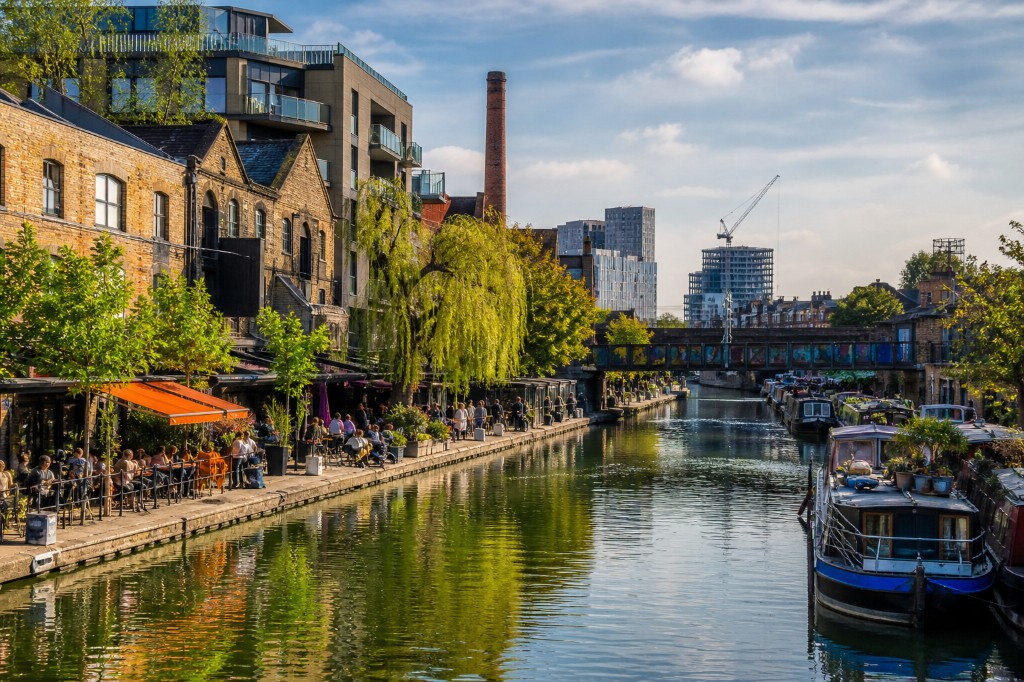
Hackney is one of East London’s most talked-about boroughs: creative, diverse, energetic, fashionable, political, expensive in parts, rough-edged in others, and full of local identity. For many people moving to London, Hackney represents a particular idea of the city: independent cafés, warehouse studios, canal walks, markets, music venues, converted factories, Victorian terraces, council estates, small galleries, bike lanes, street food, pubs, parks, and a strong sense that something interesting is always happening nearby.
It is not one single neighbourhood. Hackney is a borough made up of several distinct areas, including Hackney Central, London Fields, Dalston, Stoke Newington, Clapton, Homerton, Hackney Wick, De Beauvoir, Shoreditch edges and parts near Victoria Park. Each has its own identity. London Fields and Broadway Market are associated with food, coffee, weekend markets and park life. Dalston is known for nightlife, music and international food. Stoke Newington feels more village-like and family-friendly. Hackney Wick has a warehouse, canal and creative-industrial feel. Hackney Central is a practical transport and shopping hub.
For renters and newcomers, Hackney’s attraction is clear: it offers culture and lifestyle without feeling as corporate as Canary Wharf or as tourist-heavy as central London. It has strong connections to the creative industries, independent businesses, music, fashion, food and community projects. The Greater London Authority’s Creative Enterprise Zones programme describes these zones as places where artists, makers and creatives can access affordable workspace, business support and local creative-sector opportunities. Hackney Wick and Fish Island are especially associated with this creative economy.
The honest picture is that Hackney is desirable, but not always affordable or easy. Some parts are now very expensive. The area has seen major gentrification, rising rents, changing high streets and pressure on long-standing communities. Hackney’s appeal is real, but it comes with complexity. It is a creative hub, but also a place where local identity, housing pressure and inequality sit side by side.
The character of Hackney
Hackney’s character is built around contrast. It can feel stylish and independent, but also busy and imperfect. You can walk from a design studio to a traditional Turkish bakery, from a high-end restaurant to a council estate, from a quiet residential square to a noisy nightlife strip. This mixture is exactly why many residents love it.
Unlike more planned districts, Hackney feels organic. Its creativity comes partly from old industrial buildings, railway arches, street-level businesses, markets and communities that have shaped the area over decades. It is not a polished lifestyle product, even though parts of it are now heavily marketed as fashionable. The best of Hackney is still found in its mix: Caribbean, Turkish, Kurdish, Vietnamese, Jewish, African, European, student, artist, professional, family and long-term working-class communities all overlapping in different ways.
Hackney Council’s own demographic information describes the borough as highly diverse. According to Hackney’s “Knowing our communities” data, around 47% of the population come from Black and Global Majority groups, including 21.1% Black, 10.4% Asian, 6.7% Mixed and 8.7% in the “Other ethnic group” category.
That diversity matters. Hackney is not just a trend. Its cultural strength comes from migration, local activism, independent enterprise, music, food, religion, street life and community history. Newcomers often arrive for the cafés, restaurants and transport links, but the area’s deeper value comes from the communities that made it distinctive before it became fashionable.
Hackney Central
Hackney Central is the practical heart of the borough. It has shops, buses, Hackney Central Overground station, Hackney Town Hall, the Hackney Empire nearby, restaurants, cafés and links toward London Fields, Homerton and Dalston. It is not the prettiest part of Hackney, but it is one of the most useful.
For renters, Hackney Central is attractive because it gives access to the Overground, local services and several neighbouring areas. You can walk toward London Fields for the park and Broadway Market, toward Mare Street for shops and nightlife, toward Homerton for more residential streets, or toward Dalston for music and late-night options.
TfL lists Hackney Central as a London Overground station with timetables, route details and accessibility information. The station is part of the Overground network, which is essential to Hackney because the borough has no Underground station in its central areas.
The main downside of Hackney Central is that it can feel busy and uneven. Some streets are lively and useful; others feel congested or less attractive. It is a good base if convenience matters more than quiet charm.
London Fields and Broadway Market
London Fields is one of Hackney’s most desirable pockets. It has a large park, the London Fields Lido, cafés, pubs, restaurants, independent shops, railway access, and proximity to Broadway Market. The area is especially popular with young professionals, creatives, families and people who want a neighbourhood with weekend energy.
Broadway Market is one of Hackney’s best-known destinations. The official Broadway Market site states that the market operates 52 weeks a year, from 09:00 to 17:00 on Saturdays and 10:00 to 16:00 on Sundays. On market days, the street becomes a dense mix of food stalls, coffee, flowers, books, bakeries, vintage clothing, produce, visitors, dogs, bikes and locals.
This area is highly attractive, but it is also expensive. Properties near London Fields and Broadway Market command strong demand. For renters, the trade-off is clear: you pay for atmosphere, walkability and access to one of East London’s most recognisable weekend scenes.
London Fields suits people who like park life, cafés, running, swimming, pubs and food markets. It may not suit people who want low rents or quiet weekends.
Dalston
Dalston is one of Hackney’s most energetic areas. It is known for nightlife, music venues, bars, Turkish and Kurdish restaurants, cafés, Ridley Road Market, independent shops and strong transport links via Dalston Junction and Dalston Kingsland Overground stations.
The area has changed dramatically over the last two decades. It remains lively and multicultural, but it has also become more expensive and more associated with creative professionals and nightlife. Dalston can feel chaotic in a good way: buses, music, late-night food, markets, clubs, street life and constant movement.
For renters, Dalston is a strong choice if you want energy and transport. It has fast Overground connections and good bus links. It is less polished than London Fields and less village-like than Stoke Newington. It is best for people who like urban intensity.
The downside is noise, nightlife and street pressure. Living above or near busy routes can be tiring. As always in London, micro-location matters. A flat on a quieter side street can feel very different from one directly on a main road.
Stoke Newington
Stoke Newington, often shortened to “Stokey”, offers a different Hackney lifestyle. It is more residential, leafy and village-like, with independent shops, cafés, pubs, schools, churches, synagogues, parks and a strong family presence. Church Street is one of the area’s best-known high streets, with restaurants, boutiques, bakeries and local shops.
The area is popular with families, couples and renters who want Hackney culture without Dalston’s intensity. It has access to Clissold Park and is close to Newington Green and Canonbury edges. It feels more settled than some parts of Hackney.
The main disadvantage is transport. Stoke Newington does not have an Underground station. It relies on buses and Overground connections from nearby stations such as Stoke Newington and Rectory Road, depending on exact location. For some commuters, that is fine. For others, especially those who need fast central London access, it can be less convenient than Hackney Central or Dalston.
Housing in Stoke Newington can be expensive because the area is desirable, family-friendly and relatively limited in supply. It is one of Hackney’s best lifestyle areas, but not a bargain.
Hackney Wick
Hackney Wick is one of East London’s clearest examples of industrial regeneration. It sits near the Lee Navigation, Queen Elizabeth Olympic Park, Fish Island and Stratford. Historically industrial, it became known for warehouses, artists’ studios, creative spaces, canalside venues, breweries, music, studios and an alternative East London atmosphere.
Hackney Council’s Hackney Wick and Fish Island public realm framework describes how the area’s future public spaces should build on its unique character, with sustainability and circular economy principles shaping improvements.
For residents, Hackney Wick offers a very different feel from Hackney Central or Stoke Newington. It is more industrial, canalside and warehouse-oriented. It suits people who like creative spaces, studios, bars, breweries, events and proximity to the Olympic Park. It is also increasingly residential, with new developments bringing more flats and more pressure on the older creative-industrial character.
The biggest question for Hackney Wick is balance. Can it remain genuinely creative while becoming more expensive and residential? For renters, it can be exciting, but also transitional. Some parts still feel raw. Others are rapidly becoming polished.
Homerton, Clapton and Lower Clapton
Homerton and Clapton are important residential parts of Hackney. Homerton has an Overground station, access to Hackney Marshes, local shops and a more residential feel than Hackney Central. It can offer better value than London Fields, although prices have risen. Lower Clapton has become increasingly popular, especially around Chatsworth Road, which has cafés, shops, restaurants and a neighbourhood market atmosphere.
Clapton can feel more spacious and less intense than Dalston or Hackney Central. Upper Clapton and areas toward Springfield Park and the River Lea offer access to green space and water. These areas can suit renters who want Hackney identity with slightly more breathing room.
The trade-off is transport and distance. Some parts are less directly connected, and commute times depend heavily on your exact street and nearest station or bus route.
Housing and where to live
Hackney’s housing stock is varied. You can find Victorian terraces, converted flats, ex-local authority homes, warehouse conversions, modern apartment blocks, new-build developments, mansion blocks, live-work spaces and shared houses. This variety is one of the borough’s strengths, but also makes pricing complex.
The most expensive areas are usually those with strong lifestyle appeal and good transport: London Fields, Broadway Market, De Beauvoir, Stoke Newington, Victoria Park edges and parts of Hackney Wick. More affordable options may be found in parts of Homerton, Clapton, Hackney Downs, Dalston edges or further east, though “affordable” is relative.
For renters, shared housing remains common. Many people choose Hackney for a few years because it offers social life, culture and access to creative work. Renting alone in a one-bedroom flat can be expensive. Couples and sharers often manage the area more easily than single renters seeking their own place.
When choosing where to live in Hackney, think in practical zones:
- Hackney Central: best for convenience, Overground and access to multiple local areas.
- London Fields: best for park life, Broadway Market and cafés, but expensive.
- Dalston: best for nightlife, food and transport, but noisy.
- Stoke Newington: best for village feel and families, but less direct transport.
- Hackney Wick: best for creative-industrial atmosphere and Olympic Park access.
- Homerton/Clapton: good residential options with more space and green access.
Transport
Hackney is unusual because much of it is not served by the Underground. Instead, it relies on London Overground, buses, cycling and walking. This can surprise newcomers who assume every inner London borough has Tube access. In practice, the Overground is very useful, but route planning matters.
Hackney Central, Hackney Downs, London Fields, Homerton, Dalston Junction, Dalston Kingsland, Hackney Wick, Rectory Road, Stoke Newington and Clapton all play different roles depending on where you live. The Overground connects Hackney to Stratford, Highbury & Islington, Liverpool Street, Shoreditch, Whitechapel and other areas. Buses are also essential and often provide direct links where rail does not.
Cycling is popular in Hackney. The borough’s relatively flat geography, local cycling culture and proximity to central/east London make bikes practical. Many residents cycle to Shoreditch, the City, Islington, London Fields, Victoria Park or Stratford.
The main transport warning is this: check the exact commute before renting. A property may be “in Hackney” but still 18 minutes’ walk from the nearest useful station. Buses may be frequent, but slower in traffic. Cycling may be ideal for one person and unsuitable for another.
Food, cafés and nightlife
Hackney is one of London’s strongest food and café boroughs. It has Turkish restaurants in Dalston, bakeries and cafés near London Fields, pubs across the borough, vegan and vegetarian spots, natural wine bars, breweries in Hackney Wick, small restaurants, coffee roasters, market food and late-night options.
This is part of the area’s lifestyle appeal. Hackney makes it easy to socialise locally. You do not need to go into Soho or Shoreditch for a night out, although both are reachable. The area has its own cultural gravity.
Time Out’s Hackney coverage describes the borough through its restaurants, shops, pubs, markets and café scene, reflecting its status as one of London’s strongest lifestyle areas.
The cost issue is obvious. A neighbourhood with excellent cafés, pubs and restaurants makes it easy to overspend. Renters should set a social budget if they want to enjoy Hackney without losing financial control.
Parks and green space
Hackney is very strong for green space. London Fields, Hackney Downs, Victoria Park edges, Hackney Marshes, Springfield Park, Clissold Park nearby, the River Lea and Regent’s Canal all shape the borough’s outdoor life.
Hackney Marshes are especially important for sport and open space. London Fields is central to the lifestyle of the borough, especially in summer. Victoria Park, just to the south-east, is one of East London’s major parks and a strong attraction for people living near the borough’s southern and eastern edges.
Green space is one reason Hackney works for both young professionals and families. You can have urban culture and outdoor access in the same area. The best locations often combine both: near a park, but still close to transport and cafés.
Cost of living
Hackney is not cheap. It may feel less corporate than Canary Wharf or less central than Soho, but its popularity has pushed housing costs up. The creative reputation, transport improvements, food scene and lifestyle appeal all support demand.
Rent is the main cost. A room in a shared house may be manageable for many professionals, but one-bedroom flats in popular areas can be expensive. Council tax, utilities, broadband, transport and social spending must be included in any budget.
The area’s cost profile can be deceptive. Because Hackney has an informal, creative feel, newcomers sometimes expect it to be cheaper than more polished areas. In reality, desirable parts of Hackney can be premium rental locations. The cafés may be independent rather than corporate, but the prices are still London prices.
The best way to manage costs is to choose micro-location carefully. Living slightly further from London Fields or Dalston’s centre can reduce rent. Using bikes and buses can reduce transport costs. Cooking at home and using local markets can help with food spending.
Safety and street feel
Hackney is a large and varied borough, so safety and atmosphere differ by street. Some areas feel calm and residential. Others are busy late into the night. Main roads, nightlife areas and transport hubs can feel intense, especially on weekends.
For most urban-minded Londoners, Hackney feels normal: active, mixed, busy and streetwise. For people moving from quieter towns or suburbs, some areas may feel rougher than expected. This does not mean Hackney should be avoided; it means newcomers should view properties at different times of day and understand the route from station to home.
The borough’s strength is that it feels alive. The downside is that living in an alive area means noise, crowds and urban pressure.
Who Hackney suits
Hackney suits people who want creativity, food, nightlife, parks and independent culture. It is ideal for renters who want East London energy and do not need a traditional Tube-based commute. It works well for people in creative industries, tech, media, design, hospitality, music, arts, fashion and freelancers, but also for professionals who simply enjoy the lifestyle.
It can suit families, especially in Stoke Newington, London Fields edges, Clapton and near parks. But family-sized housing is expensive, and school/commute choices matter.
Hackney may not suit people who want low rent, quiet streets everywhere, large homes for less money or a polished environment. It is not a simple area. That is part of the point.
Pros of living in Hackney
- Identity: Hackney has one of London’s strongest local identities — culture, food, parks, markets, nightlife and creative energy.
- Transport: excellent Overground and bus links in many areas, even without the Tube.
- Independence: a strong independent business scene and real neighbourhood variety.
- Choice: lively, calm, canalside, market-focused, family-friendly or nightlife-heavy pockets within one borough.
Cons of living in Hackney
- Cost: Hackney’s reputation has made it expensive in many areas.
- Transport complexity: without the Tube, some commutes require more planning.
- Noise and crowding: nightlife and market areas can be intense.
- Gentrification tension: creative appeal exists alongside pressure on long-term residents and businesses.
Nearby alternatives
If you like Hackney but want a different balance, consider Islington for more central access and Georgian streets, Walthamstow for more space and Victoria line access, Stratford for transport and new developments, Bethnal Green for Tube access and East End character, Bow for value and connectivity, or Tottenham for more affordability and creative growth.
Each alternative changes the balance between price, transport, culture and space.
Final verdict
Hackney is one of London’s most interesting boroughs because it is not one thing. It is creative, diverse, green, expensive, independent, noisy, stylish, political, family-friendly in parts, nightlife-heavy in others, and constantly changing. It is East London’s creative hub not because every street is full of artists, but because the borough has repeatedly turned old spaces, local communities and independent energy into culture.
For renters and newcomers, Hackney is a strong choice if you want a neighbourhood with identity. It offers markets, parks, Overground links, cafés, music, food, studios, canals and community life. But it demands realistic budgeting and careful choice of micro-location.
The honest summary is this: Hackney is exciting, but not effortless. It rewards people who want culture, movement and local character. It frustrates people who want quiet, cheap rent and simple transport. For the right resident, Hackney is one of the best places in London to feel connected to the city’s creative life.