
Islington Area Guide – Angel, Upper Street, and where to rent
N1 living: Angel Zone 1, Upper Street dining, Barnsbury squares and Victoria line at Highbury — rent reality and micro-locations.
Overview
Islington is one of North London’s most desirable inner-city neighbourhoods: elegant, lively, literary, well-connected, expensive in the best streets, and packed with restaurants, pubs, theatres, cafés, boutiques and period homes. Centred around Angel, Upper Street and the wider N1 area, it offers a version of London living that feels urban without being overwhelming, stylish without being as flashy as Notting Hill, and residential without losing its social energy.
For many renters and newcomers, Islington is attractive because it balances convenience and character. You can live close to central London, commute quickly, walk to restaurants and pubs, shop on Upper Street, reach King’s Cross easily, and still find quiet Georgian or Victorian streets just a few minutes away from the main roads. It is not a cheap area, but it is one of those places where people often feel the premium is understandable. The location is strong, the streets are attractive, and the lifestyle is easy.
Islington is not one single environment. Angel feels busy and transport-focused. Upper Street is the social and commercial spine. Barnsbury is more residential and elegant. Canonbury is quieter and greener. Essex Road is more practical and mixed. Highbury offers larger green space and a calmer family feel. Caledonian Road and Holloway edges can offer better value and stronger transport variety. The right place to rent depends on whether you want nightlife, quiet, period charm, transport, schools, budget control or proximity to King’s Cross and the City.
The honest picture is this: Islington is one of London’s best all-round neighbourhoods if you can afford it. It suits professionals, couples, sharers, families, creatives, students with higher budgets and people who want central access without living in the West End. It is less suitable if your priority is low rent, large homes for the money or a very quiet suburban lifestyle.
The character of Islington
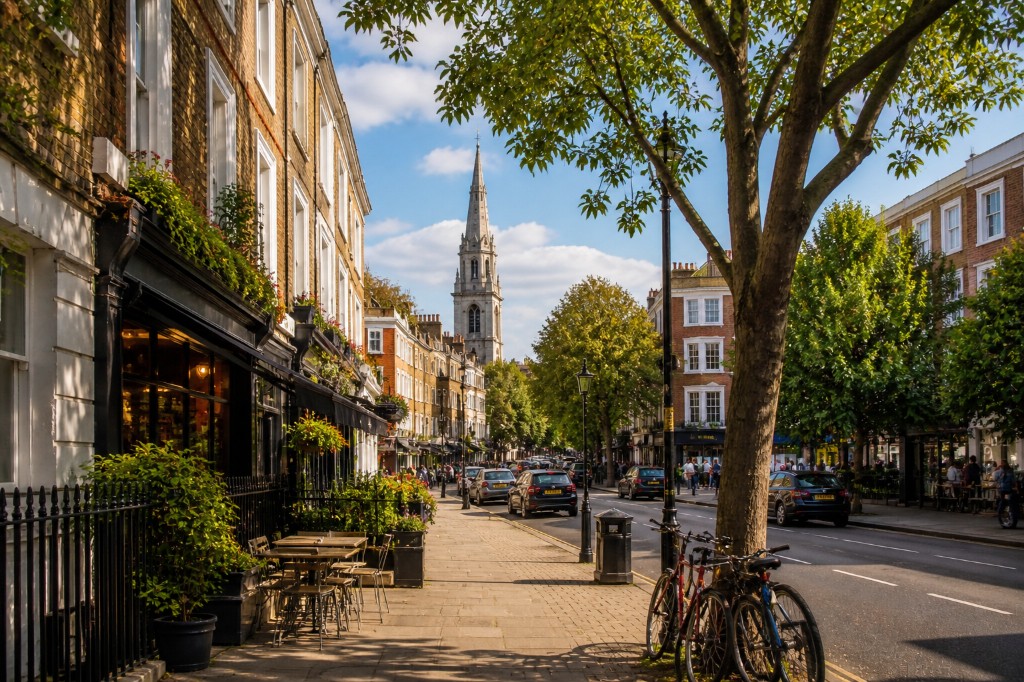
Islington has a distinctive North London character. It feels cultured, social and residential at the same time. Its streets are full of Georgian terraces, Victorian houses, garden squares, mansion blocks, converted flats, council estates, modern apartments and small commercial streets. Unlike Canary Wharf, it does not feel planned or corporate. Unlike Brixton, it is less intense and less defined by street-market energy. Unlike Hackney, it feels more established and polished. Islington’s identity is built around theatres, restaurants, pubs, books, politics, architecture, families and professional London life.
Upper Street is central to this identity. It runs north from Angel toward Highbury and is lined with restaurants, cafés, bars, shops, estate agents, theatres, salons and boutiques. Time Out London (timeout.com) covers Islington and N1 as a place for restaurants, bars, pubs, live music venues and shops, which is a good summary of its everyday appeal.
The neighbourhood is also highly walkable. From Angel, you can walk to King’s Cross, Clerkenwell, Shoreditch edges, Highbury, Canonbury, Barnsbury or Regent’s Canal depending on direction. This makes Islington feel connected in a way that is not only about the Tube. Many residents use a mix of walking, buses, cycling, Tube and Overground.
The area has a reputation for being middle-class and professional, but it is not socially uniform. Islington has long-standing communities, social housing, students, families, renters, affluent homeowners and a mixture of old and new London. This mix is part of what makes the borough interesting, though housing costs have put pressure on affordability.
Angel
Angel is the main gateway to Islington for many people. It is busy, practical and extremely well located. Angel Underground Station is on the Northern line and TfL lists it as a Zone 1 station at High Street, N1 9LQ. That Zone 1 location matters. It means Islington offers a central London position while still feeling like a neighbourhood rather than a purely commercial district.
Angel is useful for commuting to the City, King’s Cross, Euston, London Bridge, Bank and other central destinations. It also has excellent bus routes and walking access to nearby areas. The downside is that the immediate area around the station can feel busy and traffic-heavy. Upper Street, Islington High Street and Pentonville Road are active corridors, and flats directly on main roads may suffer from noise.
For renters, Angel is best if convenience is the priority. It suits people who want quick transport, restaurants, shops and nightlife immediately nearby. It is less ideal if you want maximum quiet or value for money. A flat close to Angel station often carries a strong premium, especially if it is in a good building on a quieter side street.
Upper Street
Upper Street is Islington’s social spine. It is where much of the area’s dining, shopping and evening life is concentrated. Restaurants, cafés, pubs, bars, theatres and shops run along the street, giving residents a lot of choice within walking distance. Time Out has described Upper Street and the area as home to strong eating, drinking and culture, including restaurants, cinema and music venues.
For people who want a lively but not chaotic London lifestyle, Upper Street is one of the area’s biggest attractions. You can meet friends for dinner, go to a pub, see a show, shop locally, grab coffee, or walk toward Highbury and Canonbury. It is a practical everyday street, not just a weekend destination.
The trade-off is cost and noise. Living directly on Upper Street may be convenient but can be loud, especially above commercial units or near late-opening venues. Many renters prefer side streets just off Upper Street, where they can access the amenities without living directly in the busiest part.
Upper Street also connects different versions of Islington. Toward Angel it feels busy and commercial. Moving north, it becomes slightly more relaxed and residential, especially as you approach Highbury Corner and the routes toward Highbury Fields.
Barnsbury
Barnsbury is one of Islington’s most attractive residential pockets. It sits west of Upper Street and is known for handsome Georgian and Victorian houses, quiet streets, garden squares and a more refined atmosphere. It is one of the areas people imagine when they think of elegant Islington living.
For renters, Barnsbury offers charm and calm, but usually at a price. Converted flats in period houses are common, and larger homes can be very expensive. The area suits professionals, couples and families who want character streets close to Upper Street and Angel but away from the busiest traffic.
Barnsbury is particularly appealing because it offers central convenience with a village-like residential feel. You can walk to Angel, King’s Cross or Upper Street, but return to quieter streets. This balance is valuable and reflected in demand.
The main disadvantage is affordability. Barnsbury is not usually the place to search for bargain rentals. Space can also be limited in converted flats, so renters should check layouts carefully.
Canonbury
Canonbury lies to the north-east of central Islington and offers a quieter, greener and more residential feel. It has attractive streets, period homes, garden squares and access toward Highbury, Essex Road and Newington Green. It is popular with families, couples and people who want Islington’s amenities but less of the Upper Street crowd.
Canonbury has a more settled feel than Angel. It is still close to restaurants and transport, but the pace is calmer. Depending on exact location, residents may use Highbury & Islington, Essex Road, Canonbury Overground, buses or Angel.
For renters, Canonbury can be excellent if you want charm and calm. It may not be as convenient as living directly by Angel station, but it offers a better residential balance. As with Barnsbury, desirable streets are expensive, but the lifestyle quality is high.
Essex Road
Essex Road runs parallel to Upper Street and has a more practical, mixed and local feel. It has shops, cafés, pubs, supermarkets, buses, residential streets and access to Essex Road rail station. It is less polished than the smartest parts of Upper Street or Barnsbury, but it can offer better value and a more everyday Islington atmosphere.
Renters who want to be close to Angel and Upper Street without paying the absolute highest premium may consider Essex Road and nearby side streets. It is still not cheap, but it can feel less curated and less touristy. The area also gives access toward Canonbury, De Beauvoir and Newington Green.
The main things to check are road noise, building quality and the exact walking route to transport. Some parts are excellent; others feel busier or less attractive.
Highbury and Highbury Fields
Highbury is often considered separately from Islington, but it is closely connected. Highbury Fields is one of the borough’s most important green spaces, and the area around it is popular with families, professionals and people who want a more residential North London feel. Islington Council maintains information on local parks and green spaces, including a directory of main parks; Highbury Fields is one of the borough’s best-known open spaces.
Highbury & Islington station is a major advantage, offering Victoria line, London Overground and National Rail connections. This makes Highbury extremely practical for commuting across London. The area can be more expensive around the best streets and park-facing homes, but it offers a strong lifestyle mix: green space, transport, local shops and access to Upper Street.
For renters who want Islington but need better transport variety than Angel alone, Highbury can be a strong choice. It also suits people who want to be closer to Canonbury, Stoke Newington, Finsbury Park or Holloway.
Transport connections
Transport is one of Islington’s biggest strengths. Angel gives Northern line access in Zone 1. Highbury & Islington adds Victoria line, Overground and National Rail options. Essex Road provides National Rail connections. Buses run frequently along Upper Street, Essex Road, Pentonville Road, City Road and nearby corridors.
TfL lists Angel on the Northern line, with live arrivals, timetables and route details. The Northern line connects Angel to King’s Cross St Pancras, Old Street, Moorgate, Bank and London Bridge depending on direction and branch. TfL’s Northern line route page places Angel between Old Street and King’s Cross St Pancras.
This makes Islington especially useful for people working in the City, King’s Cross, Euston, London Bridge, Old Street, Clerkenwell, Shoreditch or central London. Many commutes are short. Some residents can walk or cycle to work, particularly if they work in King’s Cross, Farringdon, Clerkenwell or the City.
Cycling is popular, but main roads can be busy. Route choice matters. Regent’s Canal can be useful for some journeys, though it can be crowded with pedestrians and cyclists. Buses are often a good alternative for short trips where the Tube would be indirect.
Renting in Islington
Renting in Islington is competitive. The area offers many flats rather than large houses, and demand is strong among professionals, couples, sharers and international renters. One-bedroom flats, two-bedroom conversions and rooms in shared flats are common. Larger family homes exist but are expensive.
The best rental strategy depends on budget and priorities. If transport is everything, Angel or Highbury & Islington may justify the premium. If atmosphere matters, side streets off Upper Street, Barnsbury or Canonbury may be ideal. If value matters, look toward Essex Road, Caledonian Road, Holloway edges, Finsbury Park edges or parts further from the most fashionable streets.
Converted flats are common, so check sound insulation carefully. A beautiful period property may have thin walls, older windows or awkward layouts. Basements can be charming but may have light and damp issues. Top-floor flats may have better light but more stairs and heat in summer. Newer flats may offer better insulation and lifts but less character.
Renters should visit at different times. A flat that feels peaceful at midday may be noisy at night if it sits near a pub, bus route or restaurant. Also check walking routes to the station, especially if you will commute early or return late.
Property styles
Islington’s housing appeal comes largely from its architecture. Georgian terraces, Victorian houses, garden squares and converted flats create a strong visual identity. Barnsbury and Canonbury are especially attractive for period homes. Around Angel and Upper Street, flats above shops and mansion-style buildings are common. Newer developments exist around some main roads and regeneration areas.
The best properties often combine period character with modern interiors. These command premium rents. Cheaper properties may be smaller, further from stations, on busier roads, or in buildings with less desirable layouts.
If you value charm, Islington is excellent. If you value space per pound, you may find better options in Holloway, Finsbury Park, Tottenham, Walthamstow, Stratford or further south/east.
Food, pubs and culture
Islington is one of London’s strongest areas for food, pubs and culture. Upper Street and the surrounding streets offer restaurants, cafés, bakeries, wine bars, gastropubs and casual dining. The area is known for theatre and performance too, with venues such as the Almeida Theatre and other cultural spaces nearby. Visit London describes Islington and Angel as a must-see London neighbourhood close to central London, highlighting its accessibility and visitor appeal.
The nightlife is active but not as intense as Soho, Shoreditch or Brixton. It is more dinner-and-pub than club-heavy. This suits many residents who want a social neighbourhood without constant late-night chaos. Pubs are a major part of the local identity, ranging from traditional locals to polished gastropubs.
The cost of enjoying Islington can be high. Restaurants, drinks, coffee and lifestyle services are priced for a relatively affluent audience. A resident can keep costs controlled by cooking at home and using supermarkets, but the temptation to eat out is constant.
Shopping and daily life
Islington is strong for daily convenience. Angel has shops, supermarkets, pharmacies, gyms, cafés and services. Upper Street has boutiques, homeware, fashion, gifts and lifestyle retail. There are also cinemas, salons, fitness studios and specialist shops.
The area is not a major shopping district like Oxford Street or Westfield, but it is more pleasant for everyday shopping. It feels local and walkable. Many residents can do most weekly errands without leaving the neighbourhood.
For larger shopping needs, King’s Cross, the West End, the City and shopping centres are reachable by Tube, bus or bike. This is one of Islington’s advantages: it has enough locally, but central London is nearby.
Parks and green space
Islington is densely built, but it has valuable parks, squares and gardens. Islington Council maintains information on local parks and green spaces, including a directory of main parks and facilities. Highbury Fields is one of the most important, while smaller spaces such as Islington Green, Barnard Park, Thornhill Square Gardens and community gardens help soften the urban environment.
That said, Islington does not have one giant park equivalent to Clapham Common or Greenwich Park in its centre. Green space is more distributed. For families, dog owners and runners, location matters. Living near Highbury Fields, Barnard Park or a good garden square can improve quality of life significantly.
The lack of large open space in some parts is one reason some families compare Islington with Highbury, Stoke Newington, Hampstead, Greenwich or Dulwich.
Families and schools
Islington can be very family-friendly, especially in Barnsbury, Canonbury, Highbury and quieter residential streets. Families value the transport, schools, parks, cafés, cultural options and central location. The area has nurseries, schools, playgrounds and family services, but family-sized housing is expensive.
Many families who start in Angel or Upper Street eventually move slightly further north or east for more space. Highbury, Canonbury, Stoke Newington, Crouch End, Muswell Hill and Walthamstow are common alternatives depending on budget and commute.
For families, the key issue is space. Islington offers excellent lifestyle and access, but not always large homes at manageable prices. School catchments and admissions should be researched carefully before committing to a property.
As with any London area, school decisions require detailed local research. Catchments and admissions can vary, and the best place to live may depend on the specific school or childcare arrangement.
Cost of living
Islington is expensive. Rent is the largest cost, but social spending can also be high. The area makes it easy to spend money on restaurants, pubs, coffee, gyms, boutiques, theatre and lifestyle services. This is part of the appeal, but it can put pressure on monthly budgets.
A realistic renter’s budget should include rent, council tax, utilities, broadband, mobile phone, transport, groceries, social spending, subscriptions and savings. Because Angel is Zone 1 and Highbury has strong transport, some residents may save time and transport costs compared with living further out. But the rent premium usually outweighs those savings.
The cost question is not only “Can I afford Islington?” It is “Can I afford Islington and still live the way I want?” If rent consumes too much of take-home pay, the restaurants and lifestyle that make the area attractive may become hard to enjoy.
Sharers often find Islington more manageable than single renters seeking one-bedroom flats. Couples can also split costs more easily. Single renters may need to compromise on size, location or building quality.
Safety and atmosphere
Islington generally feels active, central and safe in many residential areas, but it is still an inner-city borough with busy roads, nightlife, transport hubs and mixed street environments. Angel and Upper Street are busy late into the evening. Side streets can feel calm and residential. Main roads can be noisy and traffic-heavy.
As with any London area, safety perception varies by street and time. Visit the route from station to property after dark. Check whether the flat is near a pub, late-night venue or bus stop.
For many residents, the area feels comfortably urban: active enough to feel lively, but not overwhelmingly intense.
Who Islington suits
Islington suits people who want central access, restaurants, pubs, attractive streets and a neighbourhood feel. It works especially well for professionals, couples, sharers, theatre lovers, food-focused residents, people working around King’s Cross or the City, and families with sufficient budget.
It may not suit people who want low rent, large homes, quiet suburban streets or easy access to huge parks. It is more polished and expensive than some creative East London areas, but less formal than Kensington or Notting Hill.
Pros of living in Islington
- Location: close to central London while still feeling residential — Angel, Upper Street, Barnsbury, Canonbury and Highbury offer different versions of desirable inner-city living.
- Lifestyle: restaurants, pubs, theatres, cafés and shops are nearby; you do not need to travel far for a good evening out.
- Architecture: period streets and garden squares give strong visual appeal.
- Transport: Angel, Highbury & Islington, Essex Road, buses and cycling routes make it highly connected.
Cons of living in Islington
- Cost: rent is high, and lifestyle spending can follow.
- Space: limited room for the money.
- Noise: main roads and nightlife corridors can be loud.
- Competition: good rentals are fought over.
- Tone: some streets feel very polished; for a rougher creative scene, Hackney or Dalston may suit better.
Nearby alternatives
If you like Islington but want different trade-offs, consider Highbury for more transport and green space, Canonbury for quieter residential streets, Stoke Newington for a village feel, Finsbury Park for better value and transport, Camden for nightlife and music, Clerkenwell for proximity to the City (Farringdon), or Hackney for more creative energy.
Each alternative changes the balance between cost, transport, atmosphere and space.
Final verdict
Islington is one of London’s strongest all-round neighbourhoods for renters who want central access, beautiful streets and a lively local lifestyle. Angel gives fast transport and convenience. Upper Street gives restaurants, pubs, shops and culture. Barnsbury and Canonbury offer quieter period charm. Highbury adds green space and wider transport connections.
It is not cheap, and it is not the best place for maximum space. But for people who can afford it, Islington delivers a very complete version of London life: walkable, social, connected, attractive and practical.
The honest summary is simple: Islington is expensive because it works. It gives renters and residents the rare combination of central location, neighbourhood identity, cultural life and residential charm. If your budget fits and you choose the right micro-location, it can be one of the best places to rent in London.