
Notting Hill Area Guide – Property, lifestyle, and what it really costs
RBKC, Portobello, Carnival, garden squares and Central line access — prime West London and the real price of living here.
Overview
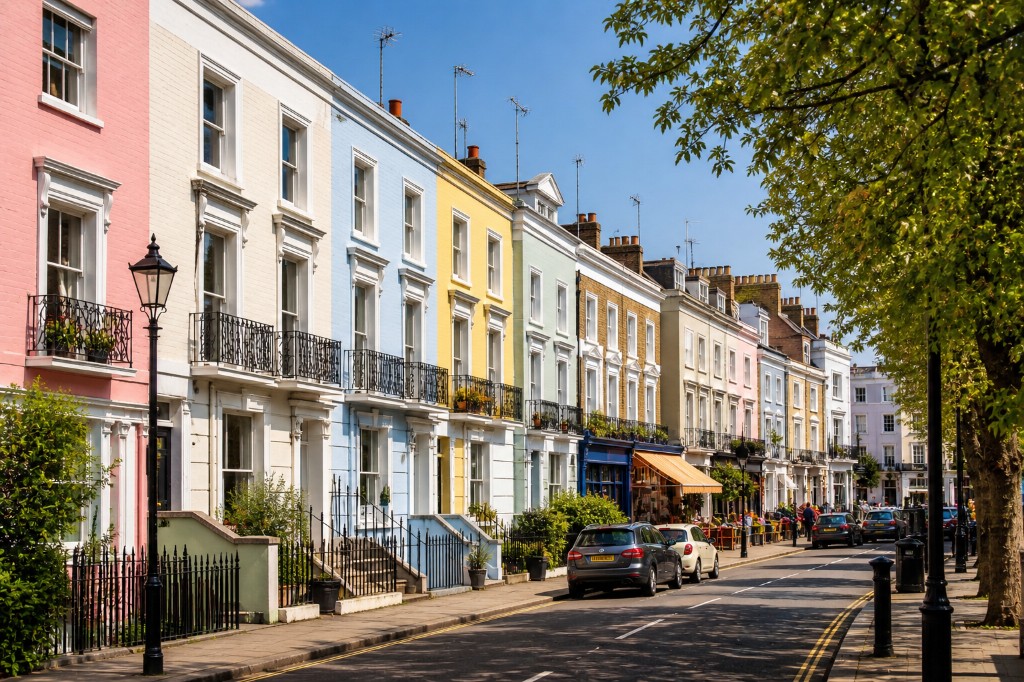
Notting Hill is one of London’s most famous neighbourhoods: colourful, elegant, expensive, cinematic, multicultural, fashionable and instantly recognisable. For many people around the world, the name suggests pastel-painted houses, garden squares, Portobello Road Market, antique stalls, boutique shopping, cafés, carnival, film locations and West London charm. But Notting Hill is more than an image. It is a real residential area with deep contrasts: grand stucco terraces, mansion flats, mews houses, luxury apartments, social housing, busy markets, tourists, private gardens, long-established communities and some of the highest housing costs in London.
Located mainly within the Royal Borough of Kensington and Chelsea, with edges blending toward Bayswater, Holland Park, Ladbroke Grove, North Kensington and Westbourne Grove, Notting Hill sits in one of the capital’s most desirable residential zones. It has excellent transport, beautiful architecture, strong shopping and dining, access to Hyde Park and Holland Park nearby, and a lifestyle that many renters and buyers find highly attractive. It is also a place where property prices and rents can be intimidating.
The honest picture is simple: Notting Hill is beautiful and convenient, but it is not a budget area. It suits people who value atmosphere, architecture, cafés, markets, shopping, central access and a polished West London lifestyle. It is less suitable for people seeking maximum space for money, low rent, or a quiet neighbourhood with no tourist pressure. Living here is often about accepting a trade-off: you pay more, but you get one of London’s most distinctive and internationally known neighbourhoods.
The character of Notting Hill
Notting Hill’s character comes from its mixture of elegance and street life. It is not as corporate as Canary Wharf, not as nightlife-heavy as Brixton, not as creative-industrial as Hackney, and not as family-park focused as Greenwich. It has its own West London identity: stylish, residential, market-led, cosmopolitan and visually memorable.
The area changes street by street. Around Portobello Road and the market, it can feel busy, colourful and tourist-friendly. Around Ladbroke Square, Pembridge Square, Kensington Park Gardens and the quieter residential streets, it becomes grander and more private. Around Westbourne Grove, it feels boutique and lifestyle-driven, with restaurants, cafés, fashion shops and wellness businesses. Toward Ladbroke Grove and North Kensington, the area becomes more mixed, more local and more connected to the communities that shaped Notting Hill’s cultural history.
This variety is one reason Notting Hill remains interesting. It is not only a luxury postcard. It has markets, council estates, Caribbean cultural history, long-term residents, independent traders and a strong social memory. Notting Hill has been transformed by wealth and property demand, but it still carries traces of older West London: migration, music, markets, activism and community.
For newcomers, this means Notting Hill can feel both glamorous and grounded, depending on where you live. Some streets feel almost impossibly picturesque. Others feel busy, noisy or tourist-heavy. The best way to understand Notting Hill is to walk it: Portobello Road on a Saturday, Westbourne Grove on a weekday morning, Ladbroke Grove in the evening, the garden-square streets on a quiet Sunday.
Property and housing
Property is central to Notting Hill’s identity. The area is famous for pastel terraces, white stucco houses, handsome garden squares, mews streets, converted flats and elegant period architecture. Housing here is some of the most desirable in London, and that desirability is reflected in prices.
The classic Notting Hill home is a period property: a tall terraced house, a converted flat in a Victorian or Georgian-style building, a maisonette, or a flat overlooking a garden square. Many of the most prestigious homes are on or near private communal gardens. These gardens are a major part of the area’s appeal: they offer greenery, exclusivity and quiet in a dense city.
There are also mansion blocks, modern flats, social housing, estate homes and newer developments, especially toward the edges. The housing mix changes significantly between the most polished parts of Notting Hill and areas closer to Ladbroke Grove, Westbourne Park or North Kensington.
For renters, Notting Hill is challenging. Rooms in shared flats may be available, but they are usually expensive for the space offered. One-bedroom flats can command premium rents because of location, architecture and lifestyle appeal. Larger homes can be extremely expensive. For buyers, the area is firmly in prime London territory.
Estate agents often describe Notting Hill as one of London’s most fashionable districts, with strong demand for period homes, garden squares and stylish flats. Area guides from property firms such as KFH (kfh.co.uk) and John D Wood (johndwood.co.uk) highlight Notting Hill’s high-value housing market and the appeal of its architecture, transport and lifestyle amenities.
The key advice for renters is to compare micro-locations. A flat near Notting Hill Gate may be excellent for transport but expensive and busy. A flat near Portobello Road may be charming but noisy during market times. A flat toward Ladbroke Grove may offer better value and more local atmosphere. A flat near Westbourne Grove may feel polished and stylish but carry a premium. The postcode alone is not enough.
Where to live in Notting Hill
Notting Hill Gate
Notting Hill Gate is the most transport-focused part of the area. It has Underground access, shops, restaurants, cinemas nearby, and quick links to central London. It is practical, but it is also busy. The main road can feel less village-like than the quieter residential streets. This area suits people who prioritise commute and convenience.
Portobello Road
Portobello Road is the symbolic heart of Notting Hill. It is lively, colourful and famous. Living close to it gives you immediate access to markets, cafés, antique shops, food stalls and street life. The downside is tourist traffic, weekend crowds and potential noise. It suits people who enjoy atmosphere and do not mind activity.
Westbourne Grove
Westbourne Grove is one of the area’s lifestyle centres, with boutiques, restaurants, cafés, wellness shops and elegant streets nearby. It is polished and desirable. It suits renters or buyers who want a more refined Notting Hill lifestyle, but costs can be high.
Ladbroke Grove
Ladbroke Grove offers a more mixed and local feel. It has strong cultural associations, transport access, markets nearby and a connection to North Kensington. It can offer slightly more variety in housing and atmosphere than the most expensive garden-square streets.
North Kensington edge
Toward North Kensington, the area becomes less postcard-like and more diverse. This can offer better value and a stronger sense of local community, though property quality and street feel vary. It is worth exploring carefully rather than relying on the Notting Hill name alone.
Portobello Road Market
Portobello Road Market (visitportobello.com) is one of Notting Hill’s greatest assets and one of London’s most famous markets. The official site presents it as a place to eat, shop, explore, people-watch, find bargains and enjoy one of the city’s best-known market streets.
The Royal Borough of Kensington and Chelsea (rbkc.gov.uk) describes Portobello Market and Golborne Road as a world-famous market that has continued to sell antiques for almost 80 years, alongside new goods and food. The council also refers visitors to Portobello’s long market history and the nearby Golborne Road offer.
For residents, the market is both a blessing and a complication. It gives the area character, variety and energy. You can buy food, vintage clothing, antiques, flowers, produce, street food and unusual items. You can meet friends, browse shops, or simply enjoy the atmosphere. But the market also brings crowds, especially on Saturdays. Living directly above or beside the busiest market stretches can be noisy and inconvenient.
The best approach is to decide whether market energy is part of the lifestyle you want. Some residents love being close to it. Others prefer to live several streets away, close enough to enjoy it but far enough to avoid the daily impact.
Lifestyle and daily life
Notting Hill lifestyle is one of its biggest selling points. The area offers independent cafés, restaurants, bakeries, pubs, boutiques, bookshops, wellness studios, galleries, cinemas nearby, food shops, florists and beautiful residential streets. It is walkable, visually appealing and close to several major West London destinations.
Daily life here can feel easy if your budget supports it. You can walk to cafés, shop locally, eat well, commute quickly, and enjoy weekend markets. Nearby areas such as Holland Park, Bayswater, Kensington, Paddington, Queensway and Hyde Park add more options.
The lifestyle is not cheap. Many local shops and restaurants are priced for affluent residents and visitors. A casual weekend of brunch, coffee, shopping and dinner can become expensive quickly. This is part of “what it really costs”: even if you manage the rent, the surrounding lifestyle can encourage high spending.
Notting Hill is also highly photogenic. This matters more than people admit. The architecture, colours, streets and market all contribute to quality of life. For some residents, living somewhere beautiful is worth paying more for. For others, the premium is not justified if the flat itself is small.
Notting Hill Carnival
Notting Hill Carnival is one of the area’s most important cultural events and one of the largest street festivals in Europe. The official Notting Hill Carnival history (nhcarnival.org) states that the first outdoor festival took place in the streets of Notting Hill in 1966, organised by local resident and social worker Rhaune Laslett, who wanted to include local West Indian residents and ease intercultural tension after the race riots of the 1950s.
London Museum (londonmuseum.org.uk) also describes Notting Hill Carnival as having started in 1966 and attracting over a million people every August to celebrate Caribbean culture.
For residents, Carnival is both a source of pride and a practical disruption. It brings music, food, costumes, sound systems, parades and enormous crowds. It also brings road closures, noise, cleaning operations, policing and access challenges. If you live directly on or near the route, Carnival weekend can be intense.
Newcomers should understand that Carnival is not simply a party. It is rooted in Caribbean culture, community resilience and local history. It is one of the reasons Notting Hill matters culturally, not just architecturally. Living in Notting Hill means living with that history.
Transport connections
Transport is one of Notting Hill’s major strengths. Notting Hill Gate Underground Station is in Zones 1 and 2 and is served by the Central, Circle and District lines. TfL (tfl.gov.uk) lists station facilities including WiFi, payphones, escalators, ticket halls and gates.
This makes the area extremely useful for commuting. The Central line gives quick access east-west across London, including Oxford Circus, Bond Street, Tottenham Court Road, Bank, Liverpool Street and White City. The Circle and District lines support journeys toward Paddington, South Kensington, Victoria, Westminster, High Street Kensington and beyond.
Ladbroke Grove and Westbourne Park stations on the Circle and Hammersmith & City lines are also important, depending on where you live. Buses are plentiful, and cycling can be useful for local West London trips, although traffic on main roads can be heavy.
Transport convenience is one reason housing costs stay high. Notting Hill gives residents access to central London while still offering a residential feel. That combination is valuable.
Parks and green space
Notting Hill itself is not built around one giant park in the way Clapham is built around Clapham Common or Greenwich around Greenwich Park. Instead, it benefits from a network of garden squares, nearby parks and access to larger green spaces.
Holland Park is nearby and is one of West London’s most attractive parks, offering gardens, woodland, sports facilities, open space and the Kyoto Garden. Hyde Park and Kensington Gardens are also within reach, depending on where in Notting Hill you live. Private communal gardens are also a major part of the area’s property appeal, though access is usually limited to residents of specific buildings or squares.
For families, dog owners and runners, proximity to these green spaces matters. A flat near a garden square or within walking distance of Holland Park can feel much more liveable than one on a busy road.
Food, cafés and shopping
Notting Hill is strong for food and shopping. The area has everything from casual cafés and bakeries to upscale restaurants, pubs, brunch spots, specialist grocers, wine shops, fashion boutiques and antique stalls. Westbourne Grove is especially known for lifestyle shopping and dining, while Portobello Road adds market energy and independent character.
The food scene is varied rather than cheap. You can find excellent casual meals, but the area is not usually where people go for low-cost everyday eating. Renters on tighter budgets may need to balance local treats with supermarket shopping and cooking at home.
For shopping, the area is excellent if you enjoy independent retail, vintage finds, antiques, fashion, interiors and browsing. It is less practical if you want large-format discount shopping. Larger shopping centres and department stores are accessible by transport, but Notting Hill’s own retail identity is more boutique and market-based.
Schools and families
Notting Hill can be attractive for families, especially those with the budget for larger homes or well-located flats. The area offers parks nearby, cultural attractions, shops, cafés, transport and a calm residential atmosphere on many streets. However, family housing can be expensive, and competition for desirable properties can be strong.
Families often compare Notting Hill with Holland Park, Kensington, Bayswater, Shepherd’s Bush, Maida Vale, Queen’s Park and parts of Fulham. The decision may depend on school catchments, budget, transport and the need for outdoor space.
Notting Hill works best for families who value location, architecture, culture and walkability. Those needing more bedrooms, gardens or lower costs may find better value slightly further west, north or south.
As with any London area, school decisions require detailed local research. Catchments and admissions can vary, and the best place to live may depend on the specific school or childcare arrangement.
What it really costs
Notting Hill is expensive in three ways: housing, lifestyle and opportunity cost.
Housing is the obvious one. Rent and purchase prices can be high, especially near Notting Hill Gate, Westbourne Grove, garden squares, Portobello Road and the most attractive residential streets. Space is costly. A small flat in a beautiful building may cost as much as a larger home elsewhere in London.
Lifestyle is the second cost. Local cafés, restaurants, shops, fitness studios and boutiques can be tempting and expensive. Living in an area designed around attractive consumption can make it easy to spend more than planned.
Opportunity cost is the third. By choosing Notting Hill, you may accept less space, fewer bedrooms, no garden or a smaller savings rate in exchange for location and lifestyle. That may be worth it, but it should be a conscious decision.
A realistic monthly budget should include rent, council tax, utilities, broadband, mobile phone, transport, groceries, eating out, fitness, subscriptions and savings. Do not judge affordability by rent alone. In Notting Hill, the surrounding lifestyle can pull spending upward.
For renters, the best cost-control strategies are:
- Choose the exact micro-location carefully; consider Ladbroke Grove or edges rather than the most premium streets.
- Share if living alone is too expensive.
- Cook at home more often.
- Use transport strategically.
- Avoid paying a premium for a street if the flat itself is poor quality.
Safety and atmosphere
Notting Hill generally feels safe and affluent in many parts, especially on residential streets and around established shopping areas. However, it is still a busy urban neighbourhood with nightlife, markets, tourists and major events. Portobello Road can be crowded. Notting Hill Gate can feel busy and traffic-heavy. Carnival brings exceptional crowd levels once a year.
As with any London neighbourhood, safety varies by street and time. The area is not a private village; it is a mixed urban district. Most residents use normal city awareness, particularly late at night and around busy transport corridors.
The atmosphere is one of the area’s strengths: attractive, active, cosmopolitan and visually appealing. But if you want total quiet, avoid the busiest market and main-road locations.
Who Notting Hill suits
Notting Hill suits people who value beauty, location, cafés, markets, architecture, transport and West London lifestyle. It is ideal for professionals, couples, international residents, affluent renters, buyers seeking character homes, and people who want central access without living in the West End.
It can suit families if the budget allows. It can also suit creatives and entrepreneurs who enjoy the area’s image and networks, though Hackney, Dalston or Peckham may offer a more active contemporary creative scene at different price points.
Notting Hill may not suit people who want maximum space, low rent, minimal tourists, or a very quiet environment. It is desirable precisely because many people want to be there.
Pros of living in Notting Hill
- Lifestyle: beautiful, walkable, well connected and full of things to do.
- Landmarks: one of London’s best-known markets, strong transport, attractive architecture and a powerful sense of place.
- Prestige: long-term desirability as one of London’s most recognisable residential names.
- Variety: market energy, garden squares, boutique streets, transport hubs or quieter pockets.
Cons of living in Notting Hill
- Cost: premium for the name, architecture and location.
- Tourism: pressure especially around Portobello Road.
- Space: limited square footage for the money.
- Lifestyle inflation: the area makes spending easy.
- Change: some streets feel less local than they once did where visitors and wealth dominate, though community identity remains in places.
Nearby alternatives
If you like Notting Hill but want different trade-offs, consider Holland Park for quieter luxury and park access, Bayswater for centrality and slightly different housing options, Shepherd’s Bush for better value and shopping, Queen’s Park for a more village-like family feel, Maida Vale for mansion flats and canals, or Kensington for a more formal and established West London environment.
Each alternative changes the balance between cost, transport, lifestyle and space.
Final verdict
Notting Hill is one of London’s most desirable neighbourhoods because it offers a rare combination of beauty, culture, transport and lifestyle. It has colourful streets, elegant homes, Portobello Road Market, Carnival history, boutique shopping, cafés, garden squares and quick access to central London. For many residents, that combination is worth the premium.
But the premium is real. Notting Hill is expensive, and not only because of rent. The lifestyle around it can also be costly. Space is limited for the money, crowds can be heavy, and the most attractive streets are highly competitive.
The honest summary is this: Notting Hill is property, lifestyle and cost in one of London’s most iconic settings. It is not the most practical choice for every budget, but for those who can afford it and value atmosphere, architecture and location, it remains one of the most appealing places to live in London.