
How to Register with a GP in London – A step-by-step guide to accessing NHS primary care as a London resident
NHS and GOV.UK sources: Find a GP, register without ID or proof of address, migrants, NHS App, 111, students and changing surgery.
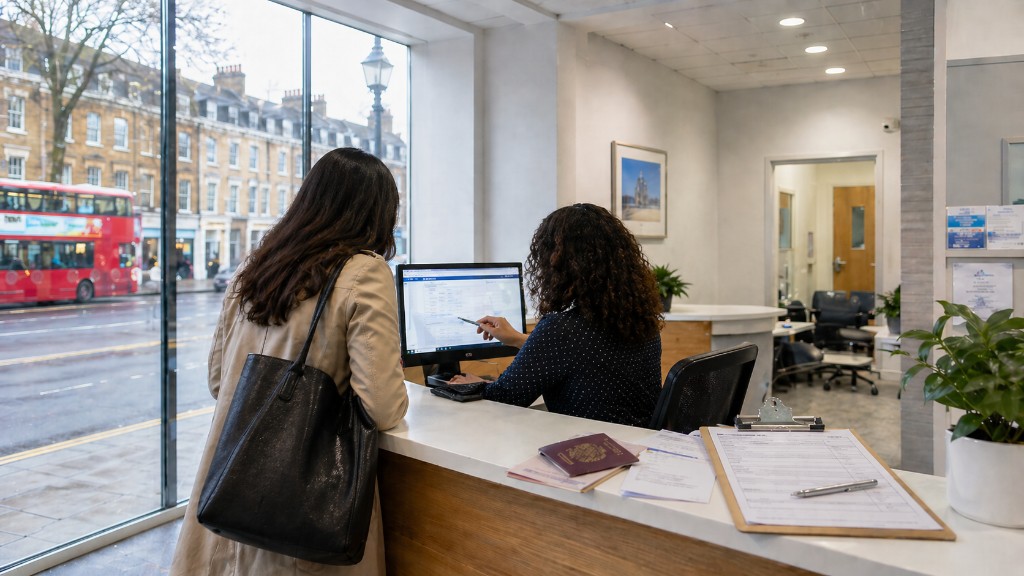
How to Register with a GP in London
A step-by-step guide to accessing NHS primary care as a London resident.
Registering with a GP is one of the first practical steps you should take after moving to London. A GP, or general practitioner, is usually your main entry point into non-emergency NHS healthcare. Your GP surgery can help with everyday health problems, repeat prescriptions, referrals to specialists, long-term condition management, preventive checks, mental health support, vaccinations, sick notes where appropriate, and advice on where to go next if your problem needs another service.
For newcomers, students, renters, international workers and families arriving in London, GP registration can feel confusing at first. London has thousands of GP practices, many surgeries work with local catchment areas, and appointment systems can vary from one practice to another. Some practices use online forms, some use the NHS App or NHS website registration service, and others still accept registration forms through reception.
The good news is that registering with a GP in England is free. NHS England has also made clear that patients do not need ID, an NHS number or proof of address to register with a GP practice, although documents can help the practice process the registration more efficiently. See NHS guidance on registering with a GP surgery.
This guide explains how GP registration works in London, what documents may be requested, what to do if you do not have documents, how to choose a GP surgery, what happens after registration, and how to access care while waiting.
Why registering with a GP matters
A GP surgery is usually your first point of contact for non-emergency healthcare in the NHS. If you have a new health concern, need a prescription, need help managing an ongoing condition, require a referral to a hospital specialist, or need support for mental health symptoms, your GP practice is normally the place to start.
The NHS GP services hub describes how to find and register with a local GP and how to book appointments. It also explains that registered patients may be able to use the NHS App to book or manage appointments and view test results.
Registering early is important because it avoids delays later. If you wait until you are unwell, you may need to complete registration forms, wait for the practice to process your details, and then request an appointment. If you register soon after moving, you are already in the system when you need help.
This is especially important if you:
- take regular medication;
- have asthma, diabetes, high blood pressure or another long-term condition;
- are pregnant or planning pregnancy;
- need mental health support;
- have children;
- need vaccinations;
- need referrals to hospital services;
- recently moved from another part of the UK;
- recently arrived in the UK.
For many people, the GP also becomes the gateway into wider NHS care. Some services can be accessed directly, such as pharmacies, NHS 111, urgent treatment centres, sexual health clinics or emergency care. But many specialist pathways still begin with a GP assessment and referral.
Who can register with a GP in London?
In England, anyone can register with a GP surgery. Registration is not based on nationality, immigration status, whether you have paid National Insurance, or whether you already have an NHS number. NHS England has repeatedly stated that patients do not need ID, an NHS number or proof of address to register with a GP practice — see how to register with a GP surgery (NHS).
GOV.UK guidance on healthcare for migrant patients in general practice explains that healthcare professionals should help migrants understand how the NHS works, their entitlements to healthcare and how to access healthcare. It also states that all possible efforts should be made to ensure effective communication, including professional interpreting and translation services rather than relying on family or friends.
Some NHS guidance is about England specifically. Healthcare rules may differ in Scotland, Wales and Northern Ireland, so this article focuses on registering with a GP in London and the wider English NHS system. Use GOV.UK migrant health entitlements for how rules may apply to your situation.
Step 1: Find GP surgeries near your address
The easiest starting point is the NHS Find a GP service. You can search by postcode in England and see nearby GP surgeries, including opening times, services, facilities, performance measures, reviews and ratings.
When choosing a GP practice in London, check:
- whether the practice accepts online registration;
- whether you are inside its catchment area;
- how close it is to your home;
- opening hours;
- appointment booking method;
- whether it offers online consultation forms;
- whether it has good access by bus, Tube, walking or cycling;
- whether it offers services relevant to you, such as vaccinations, long-term condition monitoring, family planning or online prescription requests.
Most people register with a GP near where they live. The NHS registration page explains that most people need to register near where they live, although some surgeries accept patients from further away — see register with a GP surgery (NHS).
In practice, catchment areas matter because GP surgeries are responsible for providing home visits when clinically necessary. If you live far away from the practice, it may be harder for the surgery to accept you. Some practices accept out-of-area patients, but this depends on their policies and capacity.
Step 2: Choose a practice that accepts your registration
After searching by postcode, compare a few surgeries. In London, the nearest practice is not always the best option. A surgery five minutes further away may have better online systems, longer opening hours, easier phone access or a more suitable catchment area.
However, do not spend too long comparing. The most important step is to register somewhere appropriate. You can change GP practice later if you move or if another practice becomes more suitable.
The NHS online registration process usually works like this:
- Enter a postcode or use your location to search for GP surgeries.
- Choose a surgery that offers online registration.
- Fill in the registration form.
- Submit the form for each person you want to register.
The NHS says the form takes about 15 minutes for each person. If you are registering a family, each person usually needs their own registration. Children should be registered as individual patients, even if a parent or guardian completes the form.
Step 3: Register online where possible
Many GP surgeries in England now use online registration. NHS England has expanded digital GP registration so more patients can register conveniently; see digital primary care updates via NHS England primary care and use NHS “register with a GP surgery” for the current route.
Online registration is often easier because you can complete the form at home, avoid waiting at reception, and use translation tools if English is not your first language.
You may be able to access GP registration through:
- the NHS website;
- the GP surgery’s own website;
- the NHS App;
- a link from the practice registration page.
The NHS also explains that registered patients may be able to use GP online services for appointments, test results and other GP functions.
If online registration is available, use it. It is usually faster and reduces the chance of losing paper forms.
Step 4: Register in person if needed
Some practices may still ask you to complete forms in person or provide extra details at reception. This does not automatically mean they are refusing registration. It may simply be their local process.
If you need to register in person, go to the surgery reception and say clearly: “I would like to register as a new patient.”
If you are newly arrived, renting temporarily, staying with friends, in student accommodation, in a hostel or without standard documents, explain the situation calmly. Reception staff deal with many registration situations, but mistakes can happen. If you are told that you cannot register because you do not have ID, proof of address or an NHS number, politely ask them to check the current NHS registration guidance.
NHS England has made clear that patients do not need ID, an NHS number or proof of address to register with a GP.
What documents do you need?
Officially, you do not need proof of address, immigration status, ID or an NHS number to register with a GP. NHS England has repeated this in multiple updates about online GP registration — summarised on nhs.uk.
However, many GP practices may still ask for documents because they help match you correctly in NHS systems and reduce administrative errors. If you have documents, it is usually helpful to provide them.
Useful documents can include:
- passport;
- driving licence;
- biometric residence permit;
- tenancy agreement;
- utility bill;
- bank statement;
- council tax letter;
- university accommodation letter;
- employer letter;
- letter from a hostel, shelter or support organisation;
- NHS number, if you already know it.
But lack of these documents should not automatically block registration. If you do not have them, explain your situation and ask to proceed.
This is particularly important for newly arrived migrants; people staying temporarily with friends or family; people in temporary accommodation; homeless patients; asylum seekers and refugees; international students; people escaping domestic abuse; and people who have recently moved and have no bills yet.
The NHS online GP registration system is designed to make registration simpler and more inclusive, including for people who do not have the documents practices often request.
Do you need an NHS number?
No. You do not need to know your NHS number to register with a GP. If you already have an NHS number, providing it can help the practice find your existing medical record. If you moved from another part of England, your record can usually be transferred electronically. If you are new to the NHS, the system can create or locate your patient record as part of registration. You can look up your NHS number via Find your NHS number (NHS) if needed.
Do not delay registration because you cannot find your NHS number. Register first, then resolve details later if needed.
Do you need proof of immigration status?
No. You should not need to prove immigration status to register with a GP. NHS England’s GP registration information states that patients do not need proof of address, ID or an NHS number to register; GOV.UK migrant patients in general practice guidance also makes clear that healthcare professionals should help migrants understand access and entitlements.
There is an important distinction between GP registration and some other NHS charging rules. GP consultations and core primary care access are free, but some hospital or specialist services may be subject to overseas visitor charging rules depending on immigration and residence status. See NHS entitlements: migrant health guide (GOV.UK) and Guide for overseas visitors (NHS) for how secondary care may differ.
For most newcomers, the practical message is: register with a GP early; do not assume you are excluded because of nationality; ask for help if the practice refuses registration incorrectly; understand that hospital charging rules can be different from GP registration rules.
What if you are homeless or do not have a fixed address?
You can still register with a GP if you do not have a fixed address. NHS England and local NHS guidance confirm that you do not need proof of address to register with a GP — see register with a GP surgery (NHS).
If you do not have an address, the practice may be able to use a temporary address; a hostel address; a friend’s address, if appropriate; the practice address; or an address from a support organisation.
If reception staff are unsure, ask them to check NHS guidance or speak to the practice manager. You can also contact your local Integrated Care Board (ICB) for help finding a GP practice — see find other NHS services (NHS) or your borough’s ICB website. For example, NHS North East London ICB covers part of London.
What happens after registration?
After you submit the registration form, the GP surgery processes your details. This may take a few days, depending on the practice. Some surgeries may send confirmation by text, email or letter.
You may be asked to complete a health questionnaire covering past conditions, allergies, medication, lifestyle, family history, mental health, vaccination history and communication needs.
You may also be offered a new patient health check. If you take regular medication, contact the surgery soon after registration and ask how to arrange repeat prescriptions. Do not wait until your medication runs out.
How to book GP appointments in London
Appointment systems vary. The NHS explains that you may be able to book GP appointments online using the NHS App or NHS website, although practices may only make some appointments available online — check with your surgery.
Common ways to request help include: online form on the GP website; NHS App; phone call; in-person reception request; repeat prescription request system; pharmacy referral; NHS 111 referral.
For urgent but non-emergency symptoms, ask the practice what same-day options exist. For emergencies, call 999 or go to A&E — see when to go to A&E (NHS).
What if you need care before registration is complete?
If you need urgent medical advice and are not yet registered, you still have options. For life-threatening emergencies, call 999 or go to A&E. For urgent but non-life-threatening problems, use NHS 111 online or phone 111.
Pharmacies can help with many common minor illnesses — see Pharmacies (NHS). Urgent treatment centres and out-of-hours services vary by area; NHS 111 can direct you.
Accessing mental health support through a GP
Your GP can be an important first point of contact for mental health concerns. They can assess symptoms, discuss options, prescribe where appropriate, refer you to NHS Talking Therapies or specialist services, and advise on crisis support.
If you feel at immediate risk of harming yourself or someone else, seek urgent help. Do not wait for a routine GP appointment. See getting help if you are suicidal (NHS) or call 999 in an emergency.
Referrals to specialist NHS services
GPs often refer patients to hospital specialists or community services. When referred, ask what service you are being referred to, whether the referral is routine or urgent, expected waiting time, and how you will receive appointment details. Keep your contact details updated with your GP surgery.
Registering children with a GP
Children should be registered with a GP as soon as possible after moving. If you have vaccination records, bring or upload them. Government immunisation information for migrants is published on GOV.UK immunisation collection and the Green Book is maintained by UK Health Security Agency.
Registering as a student
Students moving to London should register with a local GP near their term-time address. The NHS advises finding local health services when you move — see register with a GP surgery. Do not assume university enrolment automatically registers you with a GP; you usually still complete surgery registration yourself.
Changing GP surgery after moving within London
London renters move frequently. If you move, check whether your current GP still covers your new address. If not, register with a new local practice via Find a GP. Your new registration usually triggers record transfer; tell both practices if you have ongoing prescriptions or referrals.
What to do if a GP practice refuses registration
A practice can refuse registration in some situations, for example if you live outside its catchment area or if the practice list is closed. It should not refuse you simply because you do not have ID, proof of address or an NHS number — see NHS registration guidance.
If you are refused, ask politely for the reason in writing and whether it is catchment/list closure or documents. If you cannot find a GP, contact your local ICB or try Find a GP again; lists change over time.
Practical checklist for London newcomers
Before registering: find your postcode; search using Find a GP; check catchment and online registration; complete the form or visit reception; provide documents if you have them; register children separately; ask how appointments and repeat prescriptions work; set up NHS App access after registration if possible.
After registration: confirm contact details; ask how prescriptions work; book a new-patient check if offered; keep your address updated; use NHS 111, pharmacy or urgent care for immediate non-emergency needs.
Official sources and useful links
- NHS: Register with a GP surgery
- NHS: Find a GP
- NHS: GP services
- NHS App
- NHS England: Primary care
- GOV.UK: NHS entitlements — migrant health guide
- GOV.UK: Healthcare for migrant patients in general practice
- Example ICB: NHS North East London (search for your area’s ICB online or via local NHS pages)
Final summary
Registering with a GP in London is free and should be done soon after moving. Your GP practice is your main route into everyday NHS care, repeat prescriptions, referrals, preventive health checks and mental health support. You can usually search by postcode through NHS Find a GP, choose a local surgery, and register online or through the practice.
You do not need ID, proof of address, immigration status documents or an NHS number to register with a GP in England, although providing documents can help the surgery process your details more quickly.
For renters, students, migrants and newcomers, the most important advice is simple: register early, keep your contact details updated, ask how your surgery handles appointments and prescriptions, and use NHS 111, pharmacies, urgent treatment centres or emergency services when appropriate.
A GP registration may feel like a small administrative task, but it can make healthcare access much faster and safer when you actually need help.