
Tooting Area Guide – South London’s hidden gem for renters
Wandsworth SW17: Northern line at Broadway and Bec, Tooting Common and markets — South Asian food, NHS hub and rent value vs Clapham.
Overview
Tooting is one of South London’s most practical and underrated neighbourhoods for renters. It offers Northern line transport, strong food culture, busy high streets, large green spaces, relatively better value than many neighbouring areas, and a local identity that feels more grounded than polished. It sits in the London Borough of Wandsworth, between Balham, Streatham, Colliers Wood, Earlsfield, Mitcham and Wandsworth Common. For many renters, Tooting is attractive because it gives access to the same broad South London lifestyle as Clapham and Balham, but often with more affordable housing and a stronger sense of everyday community.
Tooting is not a quiet village and it is not a luxury district. It is busy, mixed, diverse, noisy in places, full of food, shops, traffic, buses, students, families, sharers, medical workers, young professionals and long-standing residents. Its appeal is not based on postcard architecture or expensive boutiques. It is based on usefulness: transport, rent, food, parks, community, and access to central London.
The area is especially popular with renters who want a good balance between cost and convenience. Tooting Broadway and Tooting Bec are both on the Northern line in Zone 3, giving direct Tube access toward Balham, Clapham, Stockwell, Kennington, London Bridge, Bank, Tottenham Court Road, Euston and Camden depending on route and branch. TfL lists both Tooting Broadway and Tooting Bec as Zone 3 Northern line stations.
The honest picture is that Tooting is not as cheap as it once was. Like much of London, rents have risen. But compared with Clapham, Balham, Wimbledon Village, Putney or central areas, Tooting can still offer better value for renters who are willing to live a little further south and accept a busier, more urban high street environment. It is one of those London areas where the trade-off can make sense: less polish, more practicality.
The character of Tooting
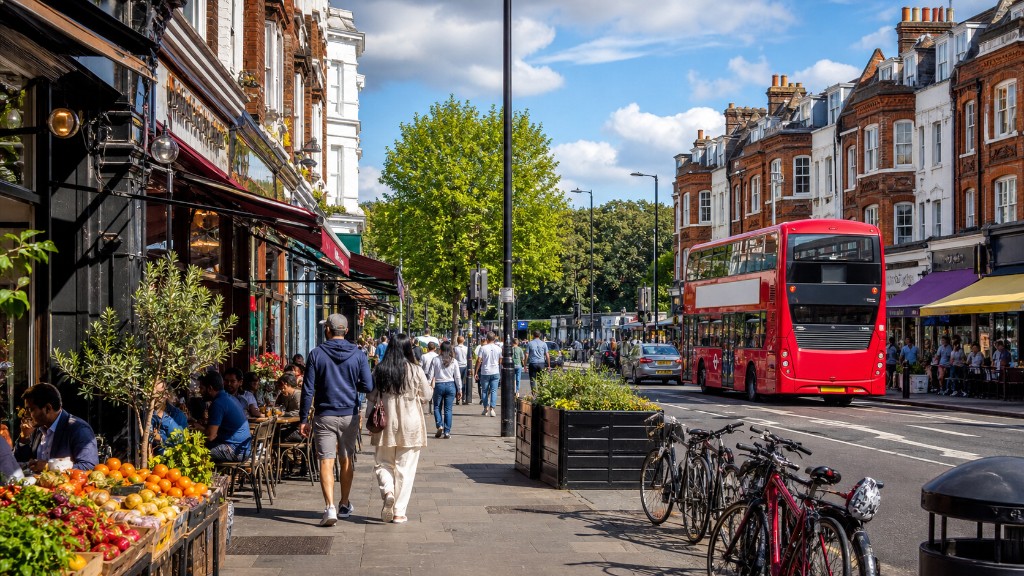
Tooting’s character is shaped by its high street, food culture, transport and diversity. Tooting High Street, Upper Tooting Road, Mitcham Road and the area around Tooting Broadway are active throughout the day. Shops, cafés, restaurants, grocers, barbers, pharmacies, buses and pedestrians give the area constant movement. This is not a neighbourhood that feels empty or decorative. It feels used.
Tooting has a strong South Asian identity, especially visible in its restaurants, sweet shops, supermarkets, clothing stores and places of worship. It is one of the best areas in London for Indian, Pakistani, Sri Lankan and broader South Asian food. It also has pubs, cafés, brunch places, street food, chain restaurants, local shops, gyms and newer businesses that reflect the area’s growing appeal to young professionals.
The area’s identity has changed over time. It has become more fashionable, but not in the same way as Peckham or Hackney. Tooting’s rise has been more about renters discovering its value: Northern line access, cheaper rents than Clapham, good food, parks and a real neighbourhood feel. It is increasingly popular, but it has not lost its practical edge.
Wandsworth Council identifies Tooting as one of the borough’s town centres, with references to the Tooting Town Centre Partnership Board and Tooting Common heritage work. This reflects its role as a proper local centre rather than just a residential suburb.
For renters, this matters. Living in Tooting means having daily services close by. You can shop, eat, commute, exercise and meet friends locally. You do not need to travel into central London for every errand. That convenience is one of the main reasons the area works so well.
Tooting Broadway
Tooting Broadway is the busier and more commercial side of Tooting. The station sits on Tooting High Street and is one of the area’s main anchors. TfL lists Tooting Broadway Underground Station at Tooting High Street, SW17 0SU, on the Northern line in Zone 3.
Around Tooting Broadway you find shops, restaurants, supermarkets, buses, cafés, gyms, takeaways, pharmacies and a strong flow of people. It is convenient, but not calm. Renters who live close to the station benefit from easy commuting, but may also deal with traffic, noise and crowds.
This part of Tooting suits people who prioritise transport and nightlife. If you want to be close to food, shops and the Tube, Tooting Broadway is practical. If you want quiet residential streets, you may prefer side roads away from the main junction, the Tooting Bec side, Furzedown, or streets closer to Tooting Common.
One of the biggest advantages of Tooting Broadway is that it offers a lot within a short walk. You can go from the Tube to dinner, shopping, the market, a pub or a gym quickly. This makes daily life easy, especially for renters with busy work schedules.
The downside is that the area can feel intense. The roads are busy, buses are frequent, pavements can be crowded, and flats above shops or on main roads may suffer from noise. As always in London, micro-location matters. A flat five minutes from Tooting Broadway on a quiet side street can feel very different from a flat directly on the high road.
Tooting Bec
Tooting Bec is slightly calmer and more residential than Tooting Broadway, though still well connected. TfL lists Tooting Bec Underground Station on Balham High Road, SW17 9AH, also in Zone 3 on the Northern line.
The area around Tooting Bec has a more balanced feel. It is close to Balham, Tooting Common and residential streets, making it attractive to renters who want Northern line access without being directly in the busiest part of Tooting Broadway. It is popular with young professionals, couples and sharers who want a slightly quieter base while keeping access to Tooting’s food and social scene.
Tooting Bec is also useful for people who want access to green space. Tooting Common is nearby, and the area has a more open feel than the densest parts of Tooting Broadway. It can be a good compromise between Balham’s higher prices and Tooting’s stronger value.
The main thing to check is distance. Some properties advertised as Tooting Bec may be closer to Balham, Streatham or Furzedown. That may be fine, but commute and lifestyle will change. Walk the route to the station before committing to a rental.
Housing and where to live
Tooting has a wide range of housing. You can find Victorian and Edwardian terraces, converted flats, maisonettes, ex-local authority homes, purpose-built flats, shared houses, newer apartment schemes and rooms above shops. This variety is one of the reasons it works for renters.
Flatshares are common. Tooting attracts young professionals, NHS workers, students, couples and people priced out of Clapham, Balham or Wimbledon. Renting a room in a shared house is often the most accessible way to live in the area. One-bedroom flats can still be expensive, but may offer better value than equivalent flats further north on the Northern line.
The best residential pockets depend on priorities:
- Tooting Broadway: best for transport, food and convenience, but it is busy.
- Tooting Bec: better for green space and a calmer residential feel.
- Furzedown: quieter and more family-oriented, with a local village feel.
- St George’s Hospital area: practical for medical workers and students.
- Colliers Wood edge: may offer better value and access to retail parks and the Northern line.
- Streatham side: can offer more space but may be further from the Tube.
- Balham edge: desirable but can be more expensive.
For renters, the biggest decision is whether to prioritise station proximity or residential calm. Being close to Tooting Broadway station is convenient, but the best quality of life may be a few streets away from the busiest roads. If you work from home, noise and light matter. If you commute daily, station distance matters. If you like food and nightlife, the Broadway side may suit you. If you want parks and calm, Tooting Bec or Furzedown may be better.
Value for renters
Tooting’s reputation as a hidden gem comes largely from rental value. It offers Northern line access and a lively local scene at prices that can be more manageable than Clapham, Balham, Wimbledon or central London. That does not mean it is cheap. It means the overall package can be strong.
The value is especially clear for sharers. A group of renters may find a house or flat that gives more space than they would get further north. Couples may find a one-bedroom flat more realistic than in Clapham. Single renters may still need to compromise, but Tooting can stretch a budget further than many better-known areas.
However, renters should not assume every listing is good value. Some properties are priced high simply because Tooting has become popular. Others may be older, poorly insulated or on noisy roads. Always compare rent with property condition, room size, distance to station, council tax, bills and commute cost.
The best way to judge value is to calculate total monthly life cost:
Rent. Bills. Council tax. Broadband. Transport. Groceries. Eating out. Gym. Savings.
Tooting can be excellent value if the rent is sensible and the property is on a good street. It can feel less good if you overpay for a small or noisy flat.
Food and restaurants
Food is one of Tooting’s biggest strengths. The area is widely known for South Asian restaurants, curry houses, dosas, Pakistani grills, Sri Lankan food, sweets, vegetarian food and casual dining. It is one of the best places in London for people who love flavour, value and variety.
Tooting’s food scene is not only about restaurants. It includes supermarkets, grocers, spice shops, bakeries, butchers, sweet shops, cafés and takeaway spots. This makes it good for both eating out and cooking at home. Renters can keep food costs under control by using local shops and cooking, while still having excellent meals nearby when they want to go out.
The newer wave of cafés, bars and street-food-style venues has added another layer. Tooting Market and Broadway Market have become important food and social spaces. They bring together older market character and newer small businesses, with food stalls, bars, casual dining and independent traders.
This combination is one of Tooting’s strongest lifestyle advantages. The area is not polished like Notting Hill or Islington, but it may offer better food value and more everyday variety. For many renters, that matters more than boutique charm.
Tooting Market and Broadway Market
Tooting’s markets are central to its modern appeal. Tooting Market and Broadway Market sit close to the high street and offer food, drink, small businesses, traders and social spaces. They help give Tooting a local identity beyond chain shops and transport.
Wandsworth’s local venue listings include Tooting Market as part of the area’s local offer. More recent public-realm work around Totterdown Street has also supported daily market activity and local micro-businesses, with market management linked to Tooting Market.
For residents, the markets are useful because they provide affordable eating, independent traders and casual evening options. They are less formal than restaurants and more interesting than generic retail. They also support Tooting’s “hidden gem” reputation by giving the area a social centre that feels local and lively.
The downside is that popular market spaces can become crowded, especially on weekends and evenings. But this is generally part of the area’s appeal rather than a serious drawback.
Tooting Common and green space
Tooting is busy and urban, but it has excellent green space nearby. Tooting Common is one of the area’s major assets. Wandsworth Council’s Tooting Common information lists open access from multiple roads, including Tooting Bec Road, Garrard’s Road, Bedford Hill, Emanuel Road, Elmbourne Road, Dr Johnson’s Avenue, Church Lane, Furzedown Drive and West Drive.
Tooting Common is especially important because it gives residents space to run, walk, cycle, relax, play sport, walk dogs and escape the high street. A 2025 management consultation described Tooting Bec and Tooting Graveney Commons together as covering 92 hectares and forming the largest green space in the borough, supporting priority habitats, sports facilities, playgrounds, wildlife and everyday recreation.
For renters, proximity to the Common can make a big difference. Living closer to Tooting Bec or Furzedown gives better access to green space. If you are choosing between a flat near the Broadway and one near the Common, think about lifestyle. Do you want food and transport outside your door, or do you want quieter streets and park access?
Tooting Common also makes the area more family-friendly. It provides outdoor space that many London renters lack. For dog owners and runners, it is one of the best reasons to choose Tooting over more built-up alternatives.
Families and schools
Tooting is not only for young renters. It also works for families, especially around Furzedown, Tooting Bec and streets closer to the Common. The area offers parks, schools, nurseries, local shops, family homes and transport. It is less polished than Wimbledon or Dulwich, but often more accessible and still practical.
Families may choose Tooting because it gives them more space than Clapham or Balham at a lower price, while keeping access to the Northern line. Furzedown in particular has a more residential and community-focused feel. It sits between Tooting, Streatham and Balham, and is often considered by families who want calmer streets without leaving South London.
School choice should be researched carefully, as in any London area. Catchments, admissions and school reputation can vary by exact address. Families should not rely only on the neighbourhood name; they should check individual schools and routes.
The main family drawback is that some parts of Tooting are busy and traffic-heavy. Main roads may not feel ideal for young children. Quieter side streets and Common-side locations are usually more attractive for family living.
St George’s Hospital and medical community
St George’s Hospital is one of Tooting’s most important institutions. It brings medical workers, students, researchers, patients and visitors into the area. This has a significant effect on local rental demand. Many hospital staff and students want to live nearby, especially if they have long shifts or irregular hours.
For landlords and renters, this creates a practical rental market. Rooms and flats near the hospital can be in demand. Local shops, cafés and services benefit from the medical community. The area around the hospital can feel busy, but it also adds stability and employment.
If you work at St George’s, living in Tooting can be extremely convenient. Walking or cycling to work can save money and time. If you do not work there, be aware that hospital proximity may affect street activity, parking, buses and rental competition.
Transport and commuting
Tooting’s transport is one of its strongest selling points. Both Tooting Broadway and Tooting Bec are on the Northern line in Zone 3. This gives direct access toward Balham, Clapham, Stockwell, Kennington and central London. TfL confirms Tooting Broadway and Tooting Bec as Zone 3 Northern line stations.
The Northern line can be very useful, especially for commuters to London Bridge, Bank, Tottenham Court Road, Euston and Camden. But it can also be crowded at peak times. Tooting is south on the line, so journeys into central London are not as short as from Clapham, but the trade-off is usually better value.
Buses are also important. Tooting has strong routes toward Balham, Streatham, Colliers Wood, Mitcham, Wimbledon, Wandsworth, Clapham and central routes. For local travel, buses can be more useful than the Tube.
Cycling is possible, especially toward Clapham, Balham, Wimbledon, Wandsworth and central South London routes, but road conditions vary. The Common provides some pleasant routes, though local safety and park rules should be respected. Recent reporting has highlighted cycling enforcement and safety concerns around Tooting Common, showing that shared park space can create tensions between cyclists, walkers and other users.
For renters, the key is to test your commute. A flat 10 minutes from the Tube may be excellent. A flat 20 minutes away may still work if buses are good. But the difference matters on cold, rainy mornings.
Shopping and daily life
Tooting is very practical for daily life. It has supermarkets, pharmacies, banks, gyms, cafés, barbers, salons, grocers, markets, takeaways and local services. The high street may not be elegant, but it is useful.
This is one of the reasons Tooting works so well for renters. You can live without constantly travelling elsewhere. Food shopping is strong, especially if you like cooking with fresh ingredients and spices. The area has plenty of affordable food options compared with more expensive parts of London.
For larger shopping trips, nearby areas such as Wimbledon, Clapham, Balham, Wandsworth and central London are accessible. Colliers Wood retail parks are also close for certain practical needs.
Tooting’s shopping is not boutique-led. It is everyday, multicultural and functional. That is exactly why many residents like it.
Nightlife and social scene
Tooting has a lively but not overwhelming social scene. It is less nightlife-heavy than Clapham or Brixton, but it has plenty of places to eat, drink and meet friends. Pubs, bars, market venues, restaurants and cafés create a strong local evening economy.
The social scene is more relaxed and food-focused than club-focused. You come to Tooting for dinner, drinks, casual nights out, market bars, curry, pubs and local gatherings. If you want bigger nightlife, Clapham, Brixton and central London are reachable.
This makes Tooting a good choice for renters who want social options without living in the middle of a late-night district. Around Tooting Broadway, noise can still be an issue, especially near pubs, takeaways and main roads. But many residential streets remain calmer.
Cost of living
Tooting’s cost of living is one of its main advantages, but it still needs realistic planning. Rent is the largest cost. Shared housing can be relatively good value compared with Clapham, Balham or Wimbledon. One-bedroom flats are more expensive, but may still compare favourably with areas further north on the Northern line.
Transport costs depend on commute pattern. Being in Zone 3 means travel into central London costs more than living in Zone 2, but the rent savings may compensate. Hybrid workers may benefit from contactless pay-as-you-go rather than fixed travelcards.
Food costs can be controlled well in Tooting. Local grocers, markets, supermarkets and affordable restaurants help. Eating out can be cheaper than in many more polished neighbourhoods, especially if you use casual local places rather than only newer bars and restaurants.
Social spending is flexible. Tooting offers enough nightlife to spend money, but not so much that constant expensive socialising feels unavoidable. This is one of the reasons it can work well for budget-conscious renters.
A sensible monthly budget should include rent, council tax, utilities, broadband, mobile phone, transport, groceries, eating out, gym, subscriptions and savings. Tooting can help your budget, but only if you choose the property carefully.
Safety and street feel
Tooting is a busy urban area. Around the Broadway, high street and main junctions, it can feel crowded, noisy and traffic-heavy. Side streets can be much calmer. Tooting Bec and Furzedown often feel more residential. Streets near the Common can feel greener and quieter.
As with any London neighbourhood, safety and comfort vary by street and time of day. Visit potential homes at night, not only in daylight. Walk from the station to the property. Check road noise, lighting, nearby pubs, takeaways and bus stops. A flat close to the station may be convenient but not necessarily peaceful.
Tooting’s active street life can feel reassuring because there are usually people around. But it can also feel intense if you prefer quiet. The area suits people comfortable with real urban London.
Who Tooting suits
Tooting suits renters who want value, food, transport and community. It works especially well for young professionals, NHS workers, students, sharers, couples, food lovers and people who want Northern line access without paying Clapham or Balham prices.
It also suits families who choose the right pocket, especially around Tooting Bec, Furzedown or Common-side streets. It suits people who like multicultural high streets, local markets and practical living.
Tooting may not suit people who want polished streets, luxury shopping, quiet everywhere or the fastest central commute. It is not glamorous. It is useful, lively and good value.
Pros of living in Tooting
- Value: strong transport and lifestyle at a more manageable price than many nearby areas.
- Food: one of South London’s best neighbourhoods for South Asian food and affordable eating.
- Green space: Tooting Common is large, useful and important for quality of life.
- Transport: the Northern line and buses make commuting and local travel practical.
- Community: Tooting feels lived-in rather than purely trend-driven.
Cons of living in Tooting
- Noise and congestion: the busiest streets can feel intense.
- Commute: the Northern line can be crowded and journeys longer than from Zone 2.
- Housing quality: uneven; inspect carefully.
- Rising rents: popularity has pushed prices up.
- Charm: lacks the polished appeal of Wimbledon, the nightlife of Brixton or Clapham’s buzz — more practical than glamorous.
Nearby alternatives
If you like Tooting but want different trade-offs, consider Balham for a more polished feel and rail links, Clapham for a stronger social scene, Streatham for more space and lower rent, Colliers Wood for practical value and Northern line access, Wimbledon for schools and suburban calm, or Earlsfield for residential streets and rail links.
Each alternative changes the balance between cost, transport, nightlife, green space and housing.
Final verdict
Tooting is one of South London’s strongest rental choices because it offers a rare mix of value, transport, food, green space and community. It is not as polished as Balham, as famous as Clapham or as suburban as Wimbledon, but it gives renters a practical and lively base with Northern line access and a real local identity.
The honest summary is simple: Tooting is a hidden gem because it works. It gives you food, markets, parks, transport and better value than many better-known South London neighbourhoods. It can be noisy, busy and uneven, but for renters who want London life without paying the highest South West prices, Tooting is one of the smartest places to look.