
Wimbledon Area Guide – Suburban calm, good schools, green space
Merton SW19: District line & rail at Wimbledon, Common and parks, tennis fame — family suburbs and where rents soften.
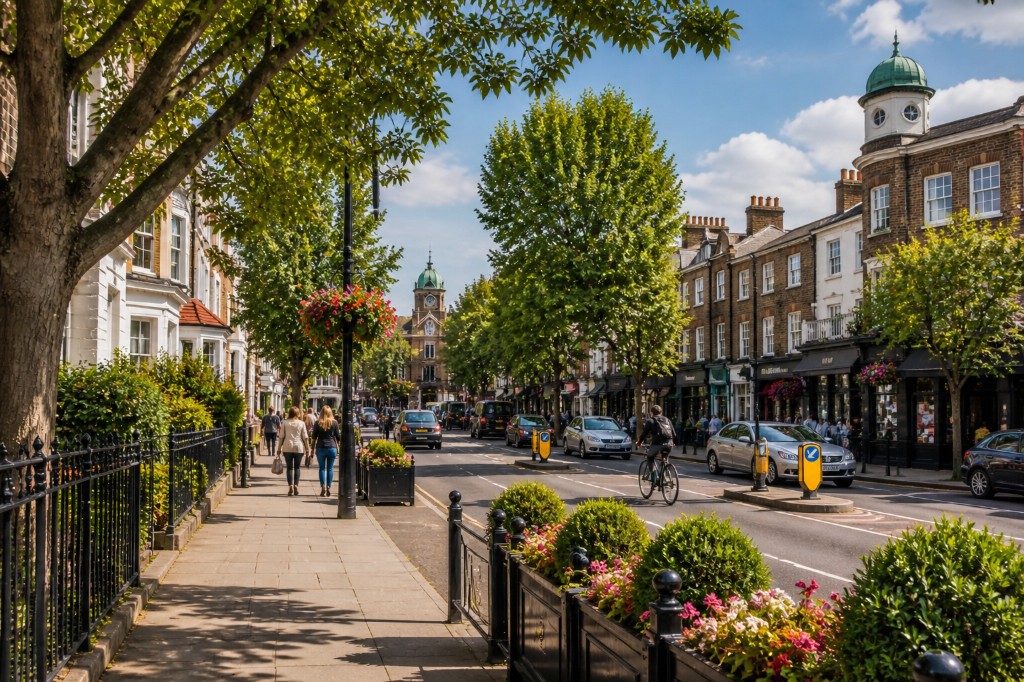
Overview
Wimbledon is one of South West London’s most desirable residential areas: green, calm, well connected, family-friendly and globally recognised because of tennis. It offers a rare London mix: suburban space, strong schools, attractive period homes, modern flats, a proper town centre, excellent parks, easy access to central London and one of the capital’s most famous sporting identities. For many renters and buyers, Wimbledon represents the London dream after the first stage of city life: more room, quieter streets, better schools, weekend walks, reliable transport and a stronger sense of long-term stability.
Located in the London Borough of Merton, Wimbledon sits roughly between Raynes Park, Southfields, Putney, Earlsfield, Colliers Wood, Morden and Kingston/Richmond edges. It is not one single place. “Wimbledon” can mean Wimbledon town centre around the station and Broadway, Wimbledon Village on the hill, South Wimbledon closer to the Northern line and Colliers Wood, Wimbledon Park near the tennis grounds and green space, or residential streets toward Raynes Park and Merton Park. Each pocket has a different price level, transport pattern and lifestyle.
The area is especially attractive for families. Good schools, green space, calm residential roads and large homes make Wimbledon one of the more practical choices for people who want to stay in London while gaining a more suburban rhythm. It also works for professionals who commute to central London but do not want to live in a dense inner-city environment. Wimbledon is quieter than Clapham, more suburban than Islington, more family-focused than Brixton or Peckham, and less corporate than Canary Wharf.
The honest picture is that Wimbledon is not cheap. Its quality of life, schools, transport links and green space keep demand high. Wimbledon Village and streets close to the Common can be very expensive. More affordable options can sometimes be found around South Wimbledon, parts of Colliers Wood, Raynes Park edges or further from the station, but the overall area remains desirable. The question is not whether Wimbledon is good; it is whether the price, commute and lifestyle match your priorities.
The character of Wimbledon
Wimbledon’s character is defined by balance. It has a town centre with shops, restaurants, supermarkets, offices and transport. It has Wimbledon Village, which feels more like a wealthy country village than an inner London district. It has large green spaces, especially Wimbledon Common and Wimbledon Park. It has strong residential streets, good family housing, tennis heritage and quick rail links to central London.
The London Borough of Merton describes itself as an outer London borough in South West London with more than 200,000 residents, around 80,000 households, thousands of businesses and five main town centres, including Wimbledon, which takes in Wimbledon Village, the Broadway and South Wimbledon. That official description is useful because it shows Wimbledon is not just a single high street; it is a wider town centre and residential district within Merton.
Compared with many London neighbourhoods, Wimbledon feels settled. People move here not only for a few years of nightlife or trend-led living, but often for schools, gardens, pets, children, commuting, work-from-home space and long-term quality of life. It is still London, but it has more breathing room than many inner areas.
The area’s calm should not be confused with dullness. Wimbledon has restaurants, pubs, cafés, shops, theatres nearby, cinemas, gyms, tennis clubs, sports facilities and access to wider South West London. But the tone is different from Hackney, Brixton or Peckham. Wimbledon is not trying to be the coolest place in London. Its appeal is comfort, stability and green space.
Wimbledon town centre
Wimbledon town centre is the practical heart of the area. Around Wimbledon station, The Broadway, Wimbledon Hill Road and the shopping streets, you will find supermarkets, cafés, restaurants, gyms, offices, estate agents, banks, shops, pharmacies and everyday services. This is where Wimbledon feels most urban.
For renters, the town centre is attractive because of transport. Wimbledon station brings together National Rail, London Underground District line and Tramlink services, making it one of South West London’s most useful stations. National Rail lists Wimbledon station with passenger facilities, customer information screens, help points, announcements, an induction loop, local information and parking/drop-off facilities.
Living close to the station is convenient but can be more expensive and busier. Flats near the town centre work well for commuters, young professionals, couples and people who want practical daily life. The downside is that central streets may have traffic, noise and less of the leafy calm people associate with Wimbledon Village or the Common.
The town centre is also where Wimbledon becomes most mixed. It is less exclusive than the Village and more practical than the residential roads. This makes it a good starting point for newcomers who want Wimbledon transport without necessarily paying the highest village premium.
Wimbledon Village
Wimbledon Village is the most picturesque and prestigious part of the area. Sitting up the hill from the town centre, close to Wimbledon Common, it has boutique shops, cafés, pubs, restaurants, period homes, smart streets, riding stables nearby and a strong village identity. It feels more affluent and calmer than the town centre.
The Village is one of the key reasons Wimbledon commands such high property interest. It offers a lifestyle that feels almost semi-rural while still being in London. Residents can walk to the Common, shop locally, meet friends at pubs and cafés, and enjoy attractive streets with a sense of permanence.
For families and affluent buyers, Wimbledon Village is highly desirable. For renters, it can be expensive and supply may be limited. Smaller flats exist, but the strongest housing stock is often larger period homes, cottages, maisonettes and high-value properties.
The trade-off is transport. Wimbledon Village is further uphill from the main station. Some residents walk down to Wimbledon station, use buses or rely on cars and taxis. If you commute daily, test the walk before renting. The Village lifestyle is beautiful, but it may be less convenient than living near the station.
Wimbledon Common
Wimbledon Common is one of the area’s defining assets. It gives the neighbourhood a sense of space that is rare in London. According to Wimbledon and Putney Commons, the Commons cover 1,140 acres of countryside within urban surroundings, run by a charity and designated as a Site of Importance for Nature Conservation, a Site of Special Scientific Interest and a Special Area of Conservation.
This is a huge advantage for residents. The Common provides walking, running, cycling routes, dog walking, horse riding, wildlife, woodland, ponds, open land and a sense of escape. It makes Wimbledon feel less like a dense city neighbourhood and more like a green residential district with direct access to countryside-like space.
For families, the Common is a major lifestyle asset. Children can grow up with access to outdoor space. Dog owners and runners benefit enormously. People working from home have somewhere to walk during the day. The Common also supports mental wellbeing in a way that is hard to quantify but easy to feel.
The proximity to the Common heavily affects property desirability. Homes near Wimbledon Village and the Common often command a premium. If green space is your top priority, the extra cost may be worth it. If transport convenience matters more, town centre or South Wimbledon may be more practical.
Wimbledon Park and tennis identity
Wimbledon Park is another important green space, especially for residents near Wimbledon Park station, Southfields and the All England Club. It offers open space, sports facilities, a lake, playgrounds and access to one of the world’s most famous sporting landscapes.
The Championships at Wimbledon are central to the area’s global identity. Each summer, the tournament brings crowds, media, visitors, temporary traffic changes and a festival atmosphere around the tennis grounds. For residents, this can be exciting or disruptive depending on exact location. Living near the All England Club means being part of a globally recognised event, but it also means planning around peak tennis weeks.
Wimbledon’s tennis future has also been in the news because of expansion plans. UK press including The Guardian covered the proposals and opposition over green space; Reuters reported Greater London Authority approval in September 2024 for a major expansion including new courts and a new show court. That context matters because Wimbledon’s sporting identity continues to shape land use, local debate and the area’s future.
For an area guide, the key point is simple: tennis is part of Wimbledon’s brand, but residents experience the area all year round. The tournament is only two weeks; the everyday appeal is schools, transport, homes and green space.
Schools and family living
Wimbledon is strongly associated with good schools and family life. This is one of the biggest drivers of housing demand. Families move here because they want a London address with suburban calm, strong education options, parks, sports facilities and safe-feeling residential streets.
The area has a mix of state and independent schools, nurseries and family services. Merton as a borough has a reputation for family living, and Wimbledon sits at the more desirable end of that market. Parents often compare Wimbledon with Raynes Park, Kingston, Richmond, Putney, Barnes, Dulwich, Blackheath and parts of Wandsworth.
School planning is highly local. Catchments, admissions, faith criteria, transport routes and school performance can change, so families should research specific schools before choosing a property. It is not enough to say “Wimbledon has good schools”; the right home may depend on the exact admissions area.
The family lifestyle is one of Wimbledon’s strongest advantages. Children can access parks, sports, libraries, cafés, safe-feeling residential streets and transport links. Parents can commute while maintaining a calmer home environment. The downside is cost: family-sized houses near the best schools and green spaces can be very expensive.
Housing and property types
Wimbledon offers a broad range of housing. There are large detached and semi-detached houses near the Village, period terraces, Edwardian homes, Victorian conversions, mansion flats, modern apartments, purpose-built blocks, maisonettes and family houses around Merton Park, South Wimbledon, Wimbledon Chase and Raynes Park edges.
The most expensive properties are generally around Wimbledon Village, near the Common, or in prestigious residential streets with large homes and gardens. These areas attract wealthy families, professionals and international buyers. The town centre offers more flats and smaller homes. South Wimbledon can provide better value and useful Northern line access from nearby stations such as South Wimbledon and Colliers Wood, although it feels less “classic Wimbledon” than the Village.
Wimbledon Park and Southfields edges are attractive for people who want tennis access, parks and residential streets. Merton Park has a quieter, family-oriented feel. Raynes Park offers suburban rail convenience and can sometimes provide more space for money than central Wimbledon.
For renters, Wimbledon can be competitive. Good family houses and well-located flats move quickly. Sharers may find options, but Wimbledon is less of a flatshare nightlife area than Clapham or Brixton. Couples and families often dominate the rental market in the more residential pockets.
Where to live in Wimbledon
Wimbledon town centre
Best for transport, convenience, shopping and commuting. Ideal for renters who want access to the station and do not need the full village feel. Expect more flats, more traffic and a busier environment.
Wimbledon Village
Best for charm, prestige, cafés, pubs, period homes and Common access. Excellent for families and affluent residents. Expensive and less convenient for daily station access unless you are happy with the hill.
Wimbledon Park
Best for green space, tennis proximity and a residential feel. Useful for families and people who want access to both Wimbledon and Southfields. Prices vary by street.
South Wimbledon
Best for more accessible rents, Northern line access nearby and practical commuting. Less picturesque than Wimbledon Village but useful and increasingly attractive for renters priced out of the core.
Merton Park
Best for quieter family living, period homes and a suburban feel. Good for people who want calm and do not need to be directly in the town centre.
Raynes Park / Wimbledon Chase edges
Best for suburban space and rail links. Often considered by families seeking more room while staying close to Wimbledon.
Transport connections
Wimbledon is one of South West London’s stronger transport hubs. Wimbledon Underground Station is in Zone 3 and served by the District line. TfL lists Wimbledon as a Zone 3 Underground station with District line services, timetables, accessibility information and station facilities.
The District line connects Wimbledon toward Earl’s Court and central/west London branches, with TfL’s District route page listing Wimbledon services among the line’s branches. National Rail services connect Wimbledon to London Waterloo and destinations across South West London and beyond. Wimbledon is also served by Tramlink, with TfL listing Wimbledon Tram Stop as part of the tram network.
This combination is a major advantage. Many London areas rely on one form of transport. Wimbledon offers rail, Tube, tram and buses. This makes it practical for commuting to Waterloo, the City via connections, Victoria via changes, Croydon via tram, Kingston/Richmond edges by bus or rail routes, and wider South West London.
The downside is that Wimbledon is not in Zone 1 or 2. Commutes can be longer than from inner areas. District line journeys into central London are useful but not always fast compared with the Victoria or Jubilee lines. National Rail to Waterloo can be quicker for central access, depending on timetable and destination.
Before renting, test the exact commute. Living “in Wimbledon” can mean a 5-minute walk to the station or a 20-minute uphill walk. That difference matters every day.
Food, cafés and shopping
Wimbledon has a solid food and shopping scene, though it is more practical and family-oriented than trend-led. The town centre has supermarkets, high-street shops, cafés, restaurants, gyms, pharmacies and everyday services. The Village offers more boutique cafés, pubs, restaurants and independent shops.
The restaurant scene is comfortable rather than edgy. You will find family-friendly dining, brunch, pubs, Italian, Asian, cafés, bakeries and casual restaurants. Wimbledon is not a late-night food destination in the way Soho, Brixton or Peckham might be, but it is easy for everyday life.
For shopping, Wimbledon town centre is useful. Residents can handle most daily needs locally without travelling into central London. For larger retail trips, Kingston, Richmond, Putney, Clapham, Westfield or central London are reachable.
The Village adds lifestyle appeal: coffee after a Common walk, Sunday lunch, boutique shopping, pubs and relaxed weekend routines. That is part of what people pay for.
Parks, sport and outdoor lifestyle
Green space is one of Wimbledon’s greatest strengths. Wimbledon Common, Wimbledon Park, Cannizaro Park, local recreation grounds, sports clubs and nearby open spaces create a strong outdoor lifestyle. Merton’s own borough narrative has highlighted that the borough has more than 100 parks and green spaces and that 18% of the borough is open space compared with a London average of 10%.
This makes Wimbledon especially appealing for families, dog owners, runners, cyclists and anyone who wants London without losing access to nature. The area supports tennis, golf nearby, cricket, football, horse riding, running and general outdoor activity.
The outdoor lifestyle also affects health and daily rhythm. Weekends often revolve around the Common, parks, cafés and sport rather than only bars or shopping. This is one of the clearest differences between Wimbledon and more urban inner neighbourhoods.
Cost of living
Wimbledon is expensive, particularly in the most desirable pockets. Rent and property prices reflect green space, schools, transport, reputation and quality of life. Wimbledon Village and Common-side addresses are premium. Town centre flats may be more accessible but still not cheap. South Wimbledon and some edges may offer better value.
The main costs are rent or mortgage, council tax, utilities, transport, groceries, childcare or school-related costs, car costs if applicable and social spending. Families should also budget for clubs, sports, tutoring, childcare, uniforms and activities.
Transport can be more expensive than inner areas depending on travel frequency and zones. However, some residents save by using National Rail efficiently, cycling locally, or working hybrid. Car ownership is more realistic here than in inner London, but parking, permits, insurance and traffic still add costs.
Wimbledon’s lifestyle can be controlled. Unlike nightlife-heavy areas, it does not force constant spending on going out. But housing costs are the major pressure. The biggest budget decision is property choice, not coffee or restaurants.
Safety and atmosphere
Wimbledon generally has a calm, safe-feeling reputation, especially around residential streets, the Village, Merton Park and areas near the Common. The town centre is busier and more urban, particularly around the station and Broadway, but it still feels less intense than many inner London hubs.
As always, street-by-street variation matters. Main roads can be noisy. Station areas can be busy at night. Quieter streets can feel very different from commercial roads. For families and newcomers, Wimbledon’s overall atmosphere is one of stability and comfort.
This does not mean it is perfect. It is still London, and normal city awareness applies. But compared with many areas, Wimbledon’s appeal is partly its sense of order and calm.
Who Wimbledon suits
Wimbledon suits families, professionals, couples, remote workers, dog owners, people who value green space, and residents who want suburban calm without leaving London. It is especially strong for people who need good schools, outdoor space and reliable transport.
It also suits people moving from more central or social areas into a more settled phase of life. Someone who enjoyed Clapham or Islington in their twenties may later choose Wimbledon for schools, space and quiet.
Wimbledon may not suit people who want nightlife, low rent, edgy culture or fast Zone 1 living. It is comfortable rather than cool. That is exactly why many residents choose it.
Pros of living in Wimbledon
- Quality of life: green space, schools, transport, calm streets and a strong residential identity.
- Common and parks: exceptional outdoor access; strong transport mix (rail, Tube, tram).
- Long-term appeal: many people put down roots, not only short lets.
- Balance: commute, family life, nature and London connectivity.
Cons of living in Wimbledon
- Cost: premium near Village, Common and strong schools.
- Pace: less lively than inner London for bars and late nights.
- Commute distance: Zone 3+; District line useful but not always the fastest into town.
- Exclusivity: best streets can feel less diverse in lifestyle than very urban areas.
Nearby alternatives
If you like Wimbledon but want different trade-offs, consider Raynes Park for suburban rail convenience and potentially better value, Southfields for tennis access and District line links, Putney for riverside living and more urban energy, Richmond for parks and river charm, Kingston for shopping and family life, Balham for more social energy and Northern line access, or Morden for better affordability and Northern line connections.
Each alternative changes the balance between cost, transport, schools, green space and lifestyle.
Final verdict
Wimbledon is one of London’s best choices for people who want suburban calm without leaving the city. It combines good schools, green space, family housing, transport links, tennis identity, parks, shops and a strong sense of residential stability. It is not cheap, and it is not the place for everyone. But for families, professionals and long-term London residents who want space, calm and quality of life, Wimbledon is one of the capital’s strongest neighbourhoods.
The honest summary is simple: Wimbledon is expensive because it offers what many people eventually want from London — good homes, good schools, green space, transport and calm. If your budget fits and your lifestyle has moved beyond nightlife-first living, Wimbledon can be one of the most rewarding places to live in South West London.