
Cycling in London: Santander Bikes and Safe Routes
Santander Cycles hire, protected Cycleways, Thames and canal routes, road rules, safety tips and when to use your own bike.
Overview
Cycling in London has changed dramatically over the last decade. What was once seen as a city dominated by buses, black cabs and crowded Underground trains has become one of Europe’s most dynamic cycling capitals. Today, riding a bike through London is not just possible — it is practical, efficient and often the fastest way to move across central districts. Whether you are visiting for a few days or living here long term, understanding how the system works — especially the Santander Cycles scheme and safe cycling routes — makes all the difference.
This guide explains how London’s public bike hire works, where protected Cycleways are strongest, how to ride safely, and how cycling fits alongside buses, the Tube and walking. For Oyster, contactless and everyday transport basics, see our Transport basics guide.
Santander Cycles (Boris Bikes)
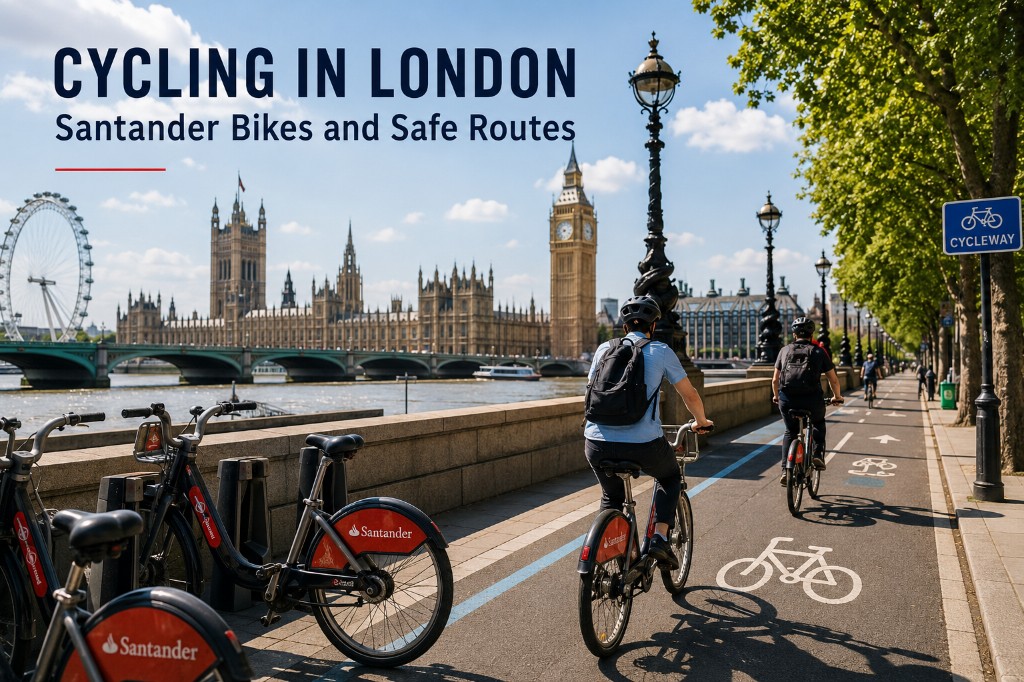
London’s public bike-sharing network is operated by Transport for London and sponsored by Santander. The bikes, often affectionately called “Boris Bikes,” are available 24 hours a day at docking stations scattered across central and inner London.
The system is simple: you hire a bike from one docking station and return it to any other within the network. No advance booking is required. You can use the official Santander Cycles app, a contactless bank card at the docking station, or a registered account.
Pricing is structured to encourage short trips. You pay a modest daily access fee, and rides under 30 minutes are included. If you keep the bike longer, additional charges apply, but you can avoid them by docking and taking another bike before the time limit expires. Always check current TfL fares and docking availability before you travel.
The Santander bikes are sturdy, reliable and designed for city riding rather than speed. They are heavier than personal bikes, but that weight makes them stable and durable in urban traffic. They are ideal for short commutes, sightseeing, or quick cross-town trips.
Coverage includes Westminster, the City of London, South Bank, Kensington, Camden, Canary Wharf and much of inner east London. For outer boroughs, you may need a personal bike or alternative transport, but within the central zone the scheme works extremely well.
Protected Cycleways and safe routes
One of the reasons cycling has become more attractive is the growth of dedicated cycle infrastructure. London has invested heavily in segregated Cycleways — physically separated lanes protected from motor traffic.
Riding along the Victoria Embankment beside the River Thames is one of the safest and most scenic experiences in the city. From the Houses of Parliament past St Paul’s Cathedral and towards the Tower of London, you can travel largely protected from traffic while enjoying iconic views. For beginners, this stretch is an excellent starting point because it combines wide lanes with clear signage and relatively predictable road conditions.
Parks also offer comfortable environments for new cyclists. Hyde Park and Kensington Gardens provide wide paths, minimal traffic and beautiful surroundings. Regent’s Park is another excellent option, particularly for relaxed riding. If you are unsure about navigating busy intersections, these green spaces allow you to build confidence before venturing into more complex areas.
East London has also benefited from improved infrastructure. Routes connecting Canary Wharf to central London are modern and well designed, often with generous lane widths. Many business commuters use these corridors daily. In residential areas, Low Traffic Neighbourhoods have transformed cycling safety by restricting through-traffic with bollards and camera enforcement. Cars cannot pass straight through these streets, but bicycles can, creating calm and pleasant environments for riders.
For those who prefer waterside scenery, Regent’s Canal offers a beautiful towpath route linking Little Venice to Camden, King’s Cross and Hackney. It is peaceful and picturesque, though riders must share space with pedestrians. Cycling slowly and courteously here is essential.
Road rules and riding safely
Understanding road rules is critical to riding safely in London. Traffic moves on the left, and cyclists must obey traffic signals just like drivers. Riding on pavements is generally prohibited unless specifically marked as shared-use. Using hand signals before turning helps drivers anticipate your movement. While helmets are not legally required, wearing one is strongly recommended, especially in busy areas. At night, front white and rear red lights are mandatory.
Urban cycling requires awareness. One of the most common hazards involves vehicles turning across your path, especially at junctions. Positioning yourself visibly in the lane — rather than hugging the curb — makes you more noticeable. Avoid lingering in the blind spots of buses and large vehicles; if you cannot see the driver in their mirror, assume they cannot see you. At roundabouts, confidence and clear positioning are essential.
Rush hour can feel intense for new riders. If you are just starting out, try cycling outside peak commuting times until you feel comfortable. Wet weather reduces braking efficiency and visibility, so ride more cautiously in rain. Winter mornings may bring icy patches, particularly on bridges.
Despite these challenges, many Londoners choose cycling as their primary mode of commuting. It offers predictable journey times and avoids Underground congestion. With continued investment in infrastructure, cycle commuting has become increasingly mainstream. Offices in central districts often provide secure bike parking and showers, reflecting the city’s shift toward active travel.
Santander Cycles vs your own bike
Choosing between Santander bikes and a personal bicycle depends on your needs. The public bikes are excellent for spontaneous short trips, tourism and occasional use. However, if you commute daily over longer distances, a lighter personal bike may be more comfortable.
If you own a bike, investing in a strong D-lock is essential. Frame and rear wheel should be secured to fixed stands. Bike theft can occur, particularly if a bike is left overnight in unsecured areas.
Why cycling matters in London
Cycling also contributes to environmental goals. Reduced congestion, lower emissions and improved air quality are major priorities for London. Each journey made by bike rather than car supports these aims. Beyond environmental impact, cycling also enhances personal well-being. Even short daily rides improve cardiovascular fitness and mental health.
London’s cycling culture has diversified. You will see professionals in suits, students, families, delivery riders and tourists all sharing the roads. Visibility of cyclists has grown, and driver awareness has improved, though vigilance is always necessary.
For visitors, cycling offers a unique perspective of the city. Instead of travelling underground between attractions, you experience the streets, architecture and river views firsthand. Riding along the Thames at sunset or crossing Tower Bridge on two wheels creates memorable moments that public transport cannot replicate.
Planning your ride
Confidence is the key factor. The city may appear overwhelming at first glance, but careful route planning transforms the experience. Use official TfL cycling maps to identify protected lanes. Start with shorter journeys. Familiarise yourself with docking stations if using Santander bikes. Once comfortable, you may find that cycling becomes your preferred way to navigate the capital.
Technology also plays a role in modern cycling. Navigation apps provide real-time directions optimised for cyclists, avoiding high-traffic routes where possible. Checking docking station availability through the Santander app prevents frustration when planning journeys. Combine cycling with the Tube or buses when a hill, distance or weather makes a mixed journey easier — see Transport basics for how pay-as-you-go and caps work on TfL services.
Final summary
Ultimately, cycling in London today is practical, increasingly safe and accessible to newcomers. The combination of a robust public bike-share system and expanding protected infrastructure has reshaped how people move through the city. While caution and awareness remain necessary, especially in traffic-heavy zones, the opportunities for safe and enjoyable riding have never been greater.
If you approach cycling with preparation — choosing appropriate routes, understanding the rental system, respecting road rules and staying alert — London reveals itself as a surprisingly cycle-friendly metropolis. Whether commuting to work, exploring historic landmarks or simply enjoying a riverside ride, two wheels provide one of the most rewarding ways to experience the capital.