
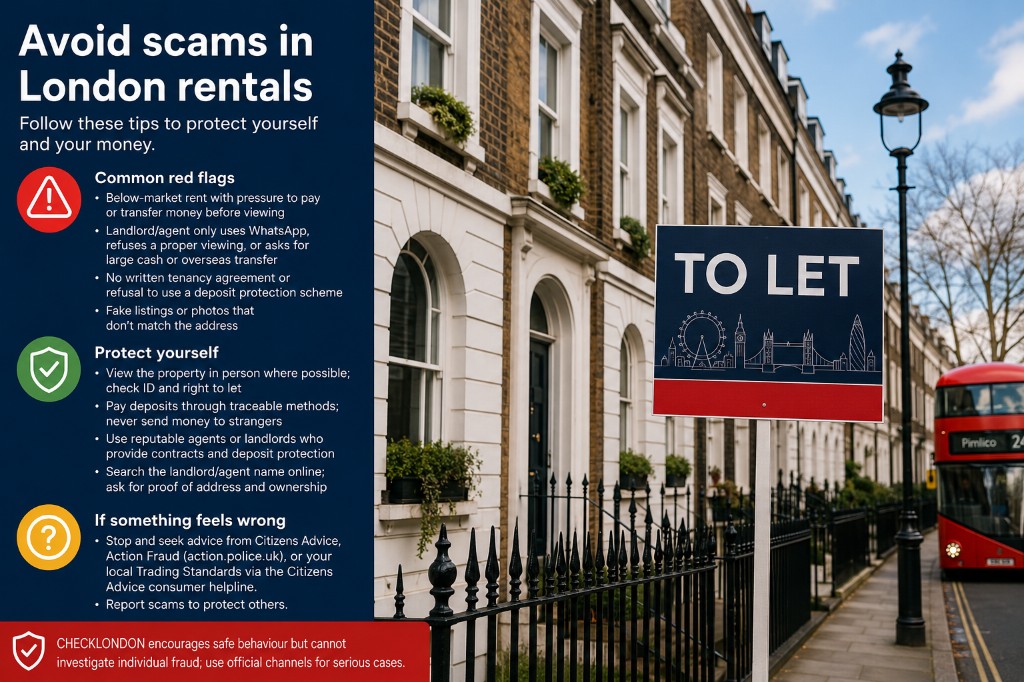
Avoid scams in London rentals
Overview
Renting a property in London can be an exciting step, whether you are relocating for work, starting university, or simply moving to a new neighbourhood. The city offers an enormous variety of accommodation, from studio flats in central districts to shared houses in residential areas and modern apartments in regenerated zones. However, London’s highly competitive rental market also attracts scammers who target people under time pressure or unfamiliar with local procedures. Understanding how rental scams work — and how to avoid them — is essential for protecting your money and your peace of mind.
For practical renting basics in the UK, see our Renting in London guide. When you are ready to search, use CheckLondon property listings and always verify before you pay.
Why scams happen in London
London’s rental demand is consistently high. Properties in desirable areas can receive multiple enquiries within hours of being listed. This fast-moving environment creates urgency, and scammers exploit that urgency. They know that tenants fear losing a good deal and may feel pressured to act quickly.
The most common warning sign is an offer that seems significantly cheaper than similar properties in the same area. If a flat in a popular neighbourhood is advertised at a rent well below market level, especially when everything else about it appears perfect, caution is necessary. Scammers often rely on the emotional appeal of a bargain combined with pressure to transfer money immediately to “secure” the property.
Common red flags
- Below-market rent with pressure to pay or transfer money before you have seen the property
- Landlord or agent who will only use WhatsApp, refuses a proper viewing, or asks for a large cash or overseas transfer
- No written tenancy agreement or refusal to use a deposit protection scheme
- Fake listings copied from other sites, or photos that do not match the address
Paying before you have viewed
Another major red flag is pressure to pay before you have seen the property in person. Fraudsters may claim they are overseas, working on an oil rig, serving in the military, or temporarily out of the country. They may say they cannot show the property but can send keys once payment is made.
In legitimate London rentals, viewings are standard practice. A landlord or agent refusing to arrange a proper viewing should immediately raise suspicion. Even if you are relocating from abroad, reputable agents can arrange virtual viewings with live video, official company email addresses, and verifiable office locations. A refusal to provide any form of secure, professional viewing is not normal.
Communication and payment methods
If the “landlord” insists on using only WhatsApp or a private messaging app and avoids phone calls or official email addresses, this is concerning. Professional letting agents operate from traceable company domains and provide clear contact information. Scammers avoid traceable systems because they intend to disappear after receiving funds.
Requests for large cash payments, cryptocurrency transfers, or overseas wire transfers are especially risky. Legitimate landlords in the UK typically use bank transfers to UK accounts, with documentation and receipts.
No contract or deposit protection
A written tenancy agreement is not optional in proper rentals. If someone suggests skipping a contract or claims it is unnecessary, you should walk away. In England, most private rentals operate under an Assured Shorthold Tenancy agreement. This contract outlines rent, deposit amount, notice periods, and responsibilities. Without it, you have little legal protection.
Equally important is deposit protection. By law, landlords must protect tenant deposits in a government-approved scheme within a set timeframe. See gov.uk on tenancy deposit protection. If a landlord refuses to use a deposit protection scheme or cannot explain how your deposit will be protected, this is a serious red flag.
Fake listings
Fake listings are increasingly sophisticated. Scammers often copy real adverts from reputable sites and repost them with altered contact details and lower prices. The photos may look professional, but subtle clues can expose fraud. Reverse image search tools can sometimes reveal if images were taken from other websites.
Another method is checking whether the photos match the actual address. Use online maps to compare building exteriors, street views and surrounding landmarks. If the interior photos appear luxury-level but the address corresponds to a completely different type of building, something is wrong.
Protect yourself
- View the property in person where possible; check the person’s identity and right to let the property
- Pay deposits through traceable methods; never send money to strangers you have only met online
- Use reputable agents or landlords who provide contracts and deposit protection paperwork
- Search the landlord or agent name online; ask for proof of address and ownership where relevant
Protecting yourself begins with viewing the property in person whenever possible. Standing inside the flat confirms that it exists and matches the description. If you cannot attend physically, ask someone you trust in London to view it on your behalf. During the viewing, verify that the person showing the property has a legitimate connection to it. Ask for identification.
If dealing with an agent, confirm that the company is registered and has a physical office address. Checking whether the agent is listed with recognised professional bodies adds an extra layer of reassurance. Landlords must also carry out right-to-rent checks where required.
Payment methods
Always use traceable payment methods such as bank transfers to UK accounts in the name of the landlord or agency. Avoid sending money to individuals whose identity you cannot verify. Never transfer funds to accounts in different names from the person you are dealing with without clear explanation and documentation. Cash payments provide no protection and are almost impossible to recover. If someone pressures you to act immediately and discourages you from checking details, pause. Urgency is a classic scam tactic.
Reputable agents and landlords
Using reputable agents or established landlords reduces risk. Professional letting agents provide formal tenancy agreements, deposit protection details, and clear invoices. They also follow compliance procedures, including identity checks and right-to-rent verification. While private landlords can be legitimate, the absence of structured processes increases risk. If renting directly from a landlord, request proof of ownership or documentation showing they have the right to let the property. This is not an unreasonable request in a city where subletting scams occur.
Research before you commit
Search the landlord’s or agent’s name online. Look for reviews, complaints or warning posts. While online reviews are not always definitive, patterns of negative experiences are concerning. Check whether the phone number appears linked to other suspicious listings. Examine the email address carefully. Slight spelling variations in domain names can indicate impersonation of legitimate companies.
Sometimes, despite precautions, a situation simply feels wrong. Trust your instincts. If inconsistencies appear in communication, documentation seems incomplete, or the person avoids straightforward questions, step back. There is always another property. Losing a potentially good rental opportunity is far better than losing a large deposit to fraud.
If something feels wrong
Stop and seek advice immediately. Citizens Advice provides guidance on housing and consumer issues and can direct you to appropriate channels. Action Fraud handles fraud and cybercrime reports in the UK. Reporting suspicious activity helps authorities track patterns and protect others. Your local Trading Standards service can also offer support, accessed via the Citizens Advice consumer helpline.
- Citizens Advice — housing and consumer guidance
- Action Fraud — report fraud and cybercrime
- Tenancy deposit protection — official scheme rules
International renters
When moving from abroad, it can be tempting to secure accommodation quickly before arrival. However, sending large deposits without verified contracts is risky. Short-term accommodation, such as hotels or serviced apartments, can provide a safe base while conducting in-person viewings. Although this may seem inconvenient, it significantly reduces exposure to scams. See also How to rent a flat in London as a foreigner for a structured approach.
Holding deposits and competitive markets
London’s competitive market sometimes encourages bidding wars, but legitimate processes remain structured. Agents may request holding deposits, but these are governed by rules. You should receive written confirmation of how the holding deposit will be applied and under what conditions it may be retained. Lack of clarity around such payments is concerning.
Scammers thrive on emotional triggers: urgency, scarcity, fear of missing out. Recognising these tactics is part of protecting yourself. Professional landlords and agents understand that tenants require reassurance. They provide contracts, identification, and clear procedures. They do not discourage questions. Transparency is a hallmark of legitimate transactions.
Digital checks and if money has been sent
Checking domain registrations, verifying company details through official registries, and confirming addresses through mapping services are basic precautions. While these steps require time, they are minor compared to the potential financial loss from fraud.
If something does go wrong and money has been transferred, act quickly. Contact your bank immediately to report suspected fraud. Some transfers can be intercepted or flagged if reported promptly. Preserve all communication records, including emails, messages and payment confirmations. These may be required when filing reports.
Final summary
Ultimately, safe renting in London depends on patience, verification and common sense. No legitimate landlord will object to reasonable checks. No genuine opportunity disappears within minutes if you need time to review documents. Take control of the process rather than allowing urgency to dictate decisions.
CHECKLONDON encourages responsible and informed behaviour when searching for accommodation. While we aim to provide helpful guidance, we cannot investigate individual cases or verify specific listings. For serious concerns or confirmed scams, always use official reporting channels and seek advice from appropriate authorities. Protecting yourself not only safeguards your own finances but also contributes to reducing fraud across the rental market.
London offers incredible opportunities and vibrant neighbourhoods to call home. With awareness of common red flags and practical protective steps, you can navigate the rental market confidently and securely. Careful preparation ensures that your move to London begins on the right footing — safe, informed and protected from avoidable risk.